
Table of Contents
I left the bowl in the bathroom at Amman's airport. Set it on the counter while washing my hands, then walked straight to my gate without it. The realization hit somewhere between security and boarding.
"The pottery?" he said.
"The pottery."
He didn't hesitate. He turned around, went back to the old town in Amman—which in Jordan involves a lot of patience—found the shop where I'd bought it, and bought me another one. Same vendor, same piece, same price probably doubled because the guy knew he had leverage. Sam brought it back to the United States months later, holding the wrapped package for me. I owe him!
I did. I still do. That bowl sits on my wooden bookshelf now, a daily reminder of a friend who spent an hour retracing our steps to a handmade pottery alcove in the middle of nowhere because he knew what that piece of pottery meant to me. It wasn't just clay and glaze he retrieved; it was three days in Jordan, a friendship tested and proven, a whole country compressed into a single fragile object.
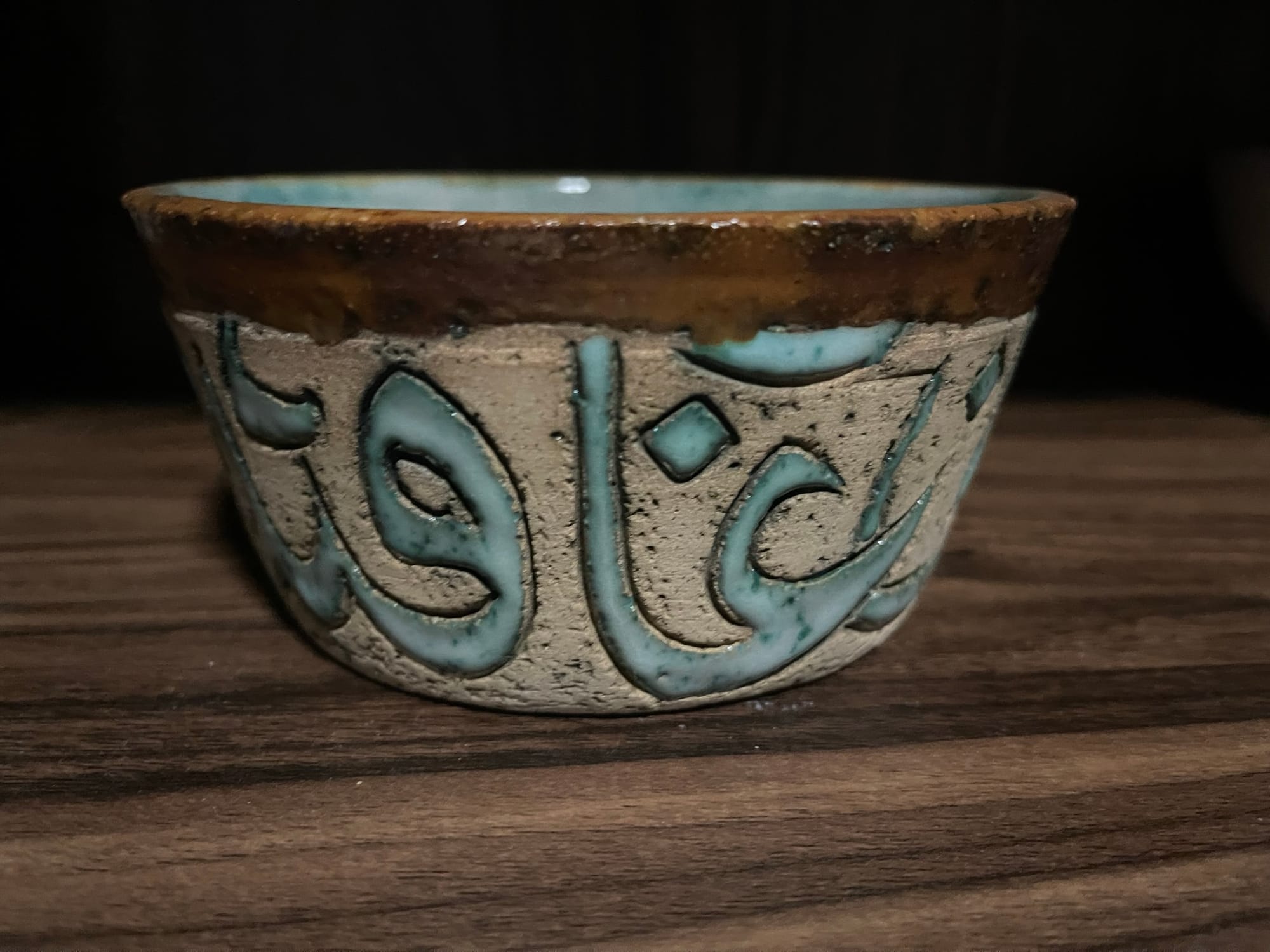
There's Arabic script on the bowl, curving around the rim in a pattern I can't read but find beautiful anyway. The letters flow into each other with a grace that the Latin alphabet can't quite achieve, each curve leading to the next in an unbroken dance. I asked Sam once what it said, and he squinted at it for a long time before outlining it for me in simple English—the calligraphy was decorative as much as linguistic, words as shapes, meaning as form. The ambiguity of not remembering what it says at all doesn't bother me. Some meanings work better when they remain slightly mysterious.
The bowl sits next to my Israeli pottery on the shelf, and I like that these pieces from places technically at odds share space peacefully in my apartment. Jordan and Israel have a peace treaty, technically, but the relationship is complicated in ways that most Americans don't fully appreciate. Yet here on my bookshelf, clay from Jerusalem and clay from Amman sit side by side without incident. Ceramics don't care about politics. They just exist, beautiful and indifferent to the conflicts that shape the lands they came from.
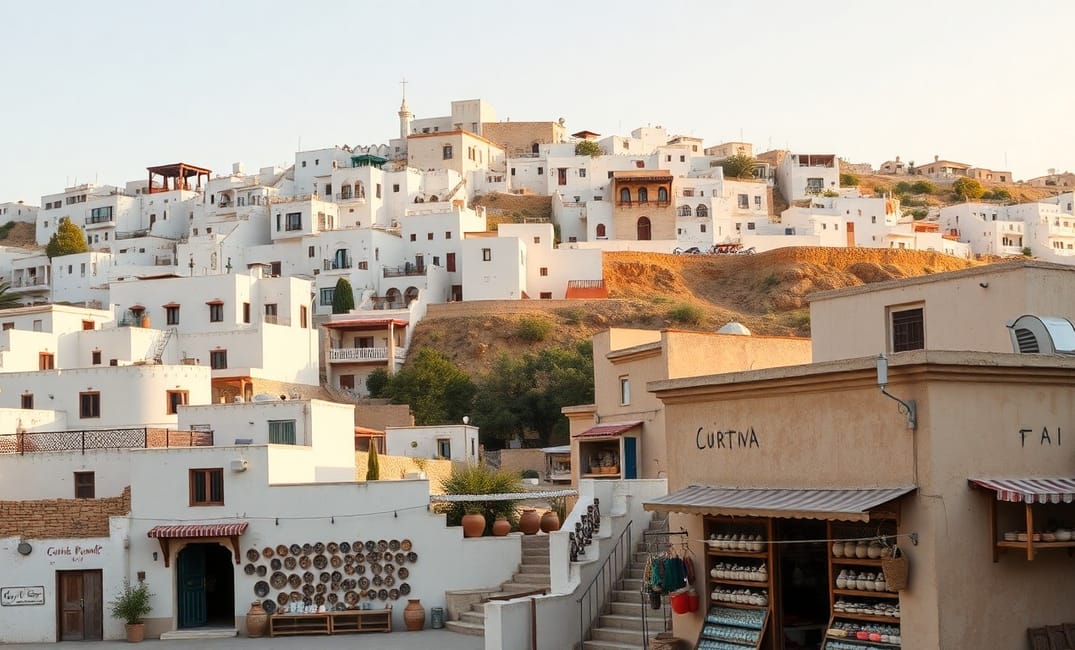
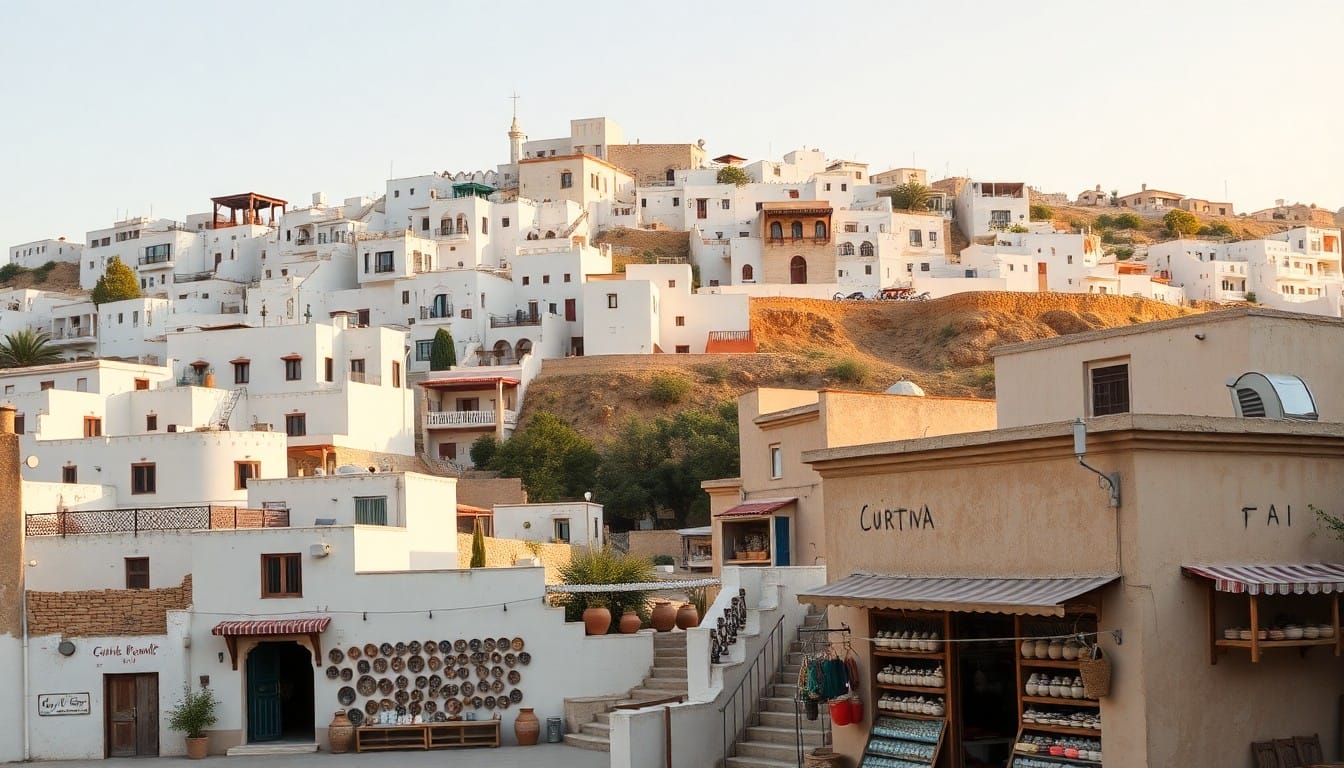
Amman itself is a city of hills, white buildings climbing upward in every direction like they're trying to escape the valleys. The architecture has a uniformity that comes from regulation—all buildings must be faced with the same pale limestone, giving the city a monochromatic quality that shifts with the light. In the morning, the hills glow golden. At noon, they bleach to bright white. At sunset, they turn pink and then gray as the shadows creep upward. It's a city that reveals itself through the passage of time, each hour showing a different face.
The piece I lost was special, objectively. Produced by a local man, probably made at his home with his own supplies. Now it is mine, nearly lost, chosen by me, carried across a country.
I arrived at night and couldn't see much, just the glow of lights scattered across the mountains like stars fallen to earth. Sam's apartment was somewhere in the middle of it all, up a road so steep the taxi driver's engine complained the whole way. The lobby had the overstuffed opulence of Middle Eastern hospitality—marble floors, ornate furniture, staff who treated every guest like visiting royalty. I was exhausted from travel and went straight to bed, not knowing that sleep would prove elusive.
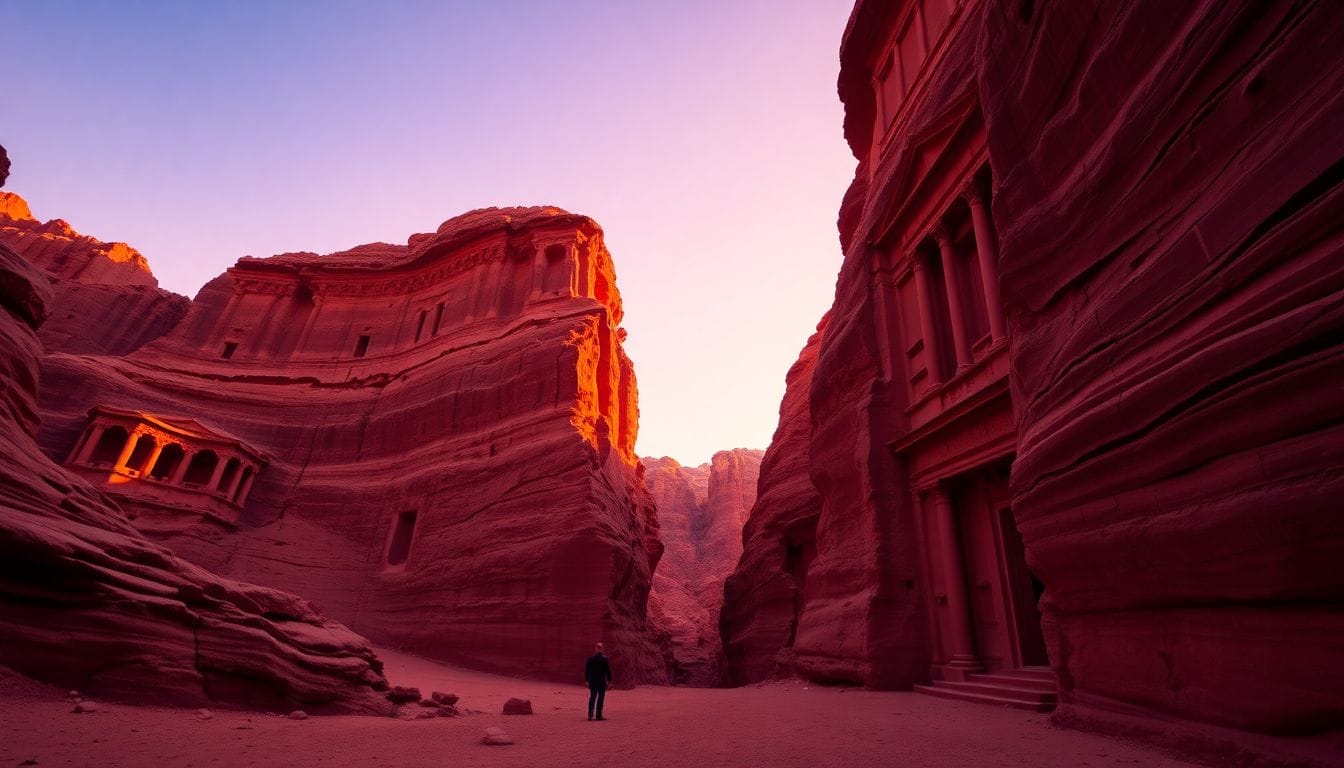
The prayer call came at three in the morning and I wasn't ready for it. In Morocco I'd been prepared; I'd read about it, expected it. But in Amman I'd somehow forgotten, and the sound woke me from deep sleep with a jolt of confusion. It wasn't just one voice—it was dozens, multiple mosques across the city calling out at the same moment, their voices overlapping and echoing off the mountains until it felt like the whole city was singing. The sound filled the darkness, coming from everywhere and nowhere, beautiful and strange and utterly foreign to everything I knew.
I lay in bed listening, disoriented, not sure if I was dreaming. The calls went on for what felt like an eternity but was probably five minutes. Then silence returned, sudden and complete, and I found myself straining to hear more. By the time my heart stopped racing, I was fully awake and wouldn't sleep again until the following night. Jet lag and culture shock make strange bedfellows.
Sam was there on a fellowship, studying Arabic at one of the language schools that cater to foreign students. He'd been in Jordan for several months by then, long enough to navigate the city like a local, to order food without pointing at menus, to make jokes in Arabic that actually landed. His fluency became my lifeline. Without him, I would have spent the whole trip in tourist bubbles, insulated from the real country by the barrier of language. With him, doors opened.
We drove into the desert one afternoon, renting a car that seemed too small for the roads we'd be driving. The landscape shifted as we left Amman—green hills giving way to brown, then to red, then to colors I don't have words for. Striations in the rock like someone had painted it, layers of geological time visible in every cliff face. We passed Bedouin camps, black goat-hair tents pitched in apparently random locations, pickup trucks parked beside camels. The old and new existing in uneasy cohabitation.
We got pulled over for speeding somewhere in the desert. A police officer approached the car, speaking rapid Arabic, and I sat in the passenger seat understanding nothing, preparing for a hassle that could ruin the afternoon. But Sam responded calmly, at length, with the kind of fluid charm that only works if you truly speak the language. I watched the officer's face soften as the conversation progressed. They laughed together at something I couldn't follow. Ten minutes later we were driving away without a ticket.
"What did you say?" I asked.
He smiled. "I told him we were visiting his beautiful country and wanted to see as much of it as possible. Then I asked about his family."
Sometimes the pieces we lose matter more than the ones we keep. The absence becomes its own kind of presence.
That, I realized, was the key to Jordan—the personal connection, the ritual of hospitality that turns strangers into guests. Every encounter followed the same pattern: initial formality, polite inquiries about health and family, the gradual warming that came from treating each other as humans first. It's a different rhythm than American transactional efficiency, and it took me days to adjust. But once I did, the country opened up in ways that pure tourism never could.
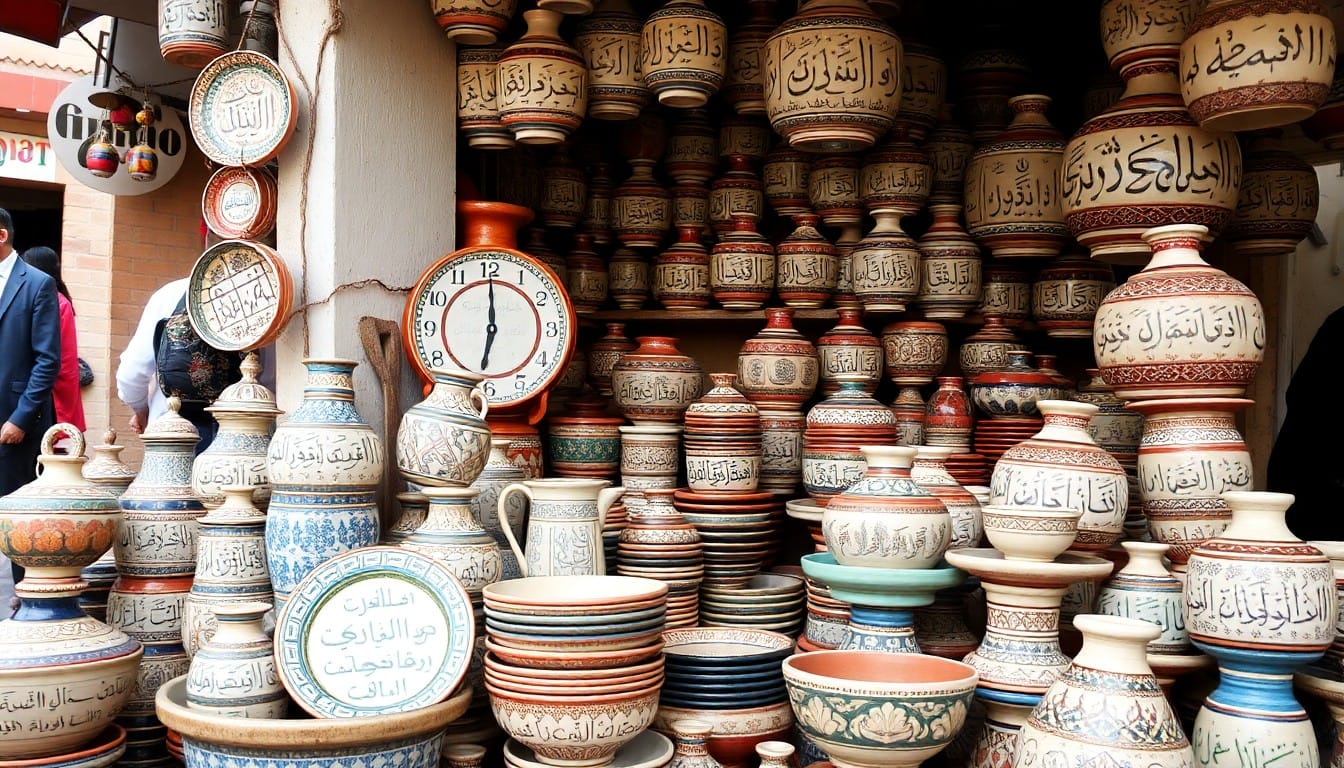
That evening we found the shop where I'd buy my bowl—a small stall on a side street in downtown Amman, the kind of place you'd walk past if you weren't looking. The vendor was an older man with a gray beard and patient eyes, surrounded by his work. Bowls and plates and decorative pieces covered every surface, each one bearing the distinctive patterns of traditional Jordanian pottery—geometric designs, calligraphic inscriptions, colors that echoed the desert we'd driven through that afternoon.
He spoke some English, enough to tell me about the tradition, about his father who'd taught him, about the prayers written on some pieces and the poetry on others. Some bowls were meant for daily use, he explained, while others were purely decorative, intended to hang on walls or sit on shelves as reminders of heritage. The distinction mattered to him; he wanted me to choose knowing what I was choosing.
I chose a piece with geometric patterns and what looked like Arabic calligraphy, though I never confirmed what it said. The glaze had depths—a base of warm tan overlaid with darker brown where the inscription curved, occasional flecks of blue catching the light from certain angles. The vendor wrapped it in newspaper, then in a plastic bag, then in another layer of newspaper. He took his time, careful with his work even after it left his hands. I got the sense that for him, the sale wasn't complete until the piece was protected for its journey.
And then I left it in the airport bathroom. Just set it down while washing my hands and walked away without it, my mind already on the flight ahead, the transition back to American life. I didn't realize it was missing until I was through security, past the point of easy return, and the loss hit me like a physical blow.
Standing in my apartment now, I sometimes pick up that bowl and feel the weight of it, the texture of the glaze, the indentations of the script. I remember the prayer call in the darkness, the desert mountains, Sam arguing with the police officer while I sat useless and monolingual. Some objects are just objects. Others carry the full weight of the experiences that brought them to you. The Amman bowl is the second kind—a vessel for memory, for friendship, for a country I barely understood but felt deeply nonetheless.