
Table of Contents
I barely remember booking the trip. One of those cheap flights you find when you're young and living in Europe—fifty euros if you don't mind a 6 AM departure and a budget airline that charges extra for breathable air.
The city was freezing when I arrived. November in Central Europe, the kind of cold that cuts through whatever you're wearing and settles in your bones. I'd packed wrong—a jacket suited for Barcelona, not for the continent's colder half—and stepped off the plane already shivering. The airport was Soviet in that unmistakable way: brutalist architecture softened slightly by commercial signage, the ghosts of communism lingering in the proportions of the hallways. My first purchase was a scarf from a street vendor in the old town, overpriced but necessary, wound around my neck twice and still not enough.
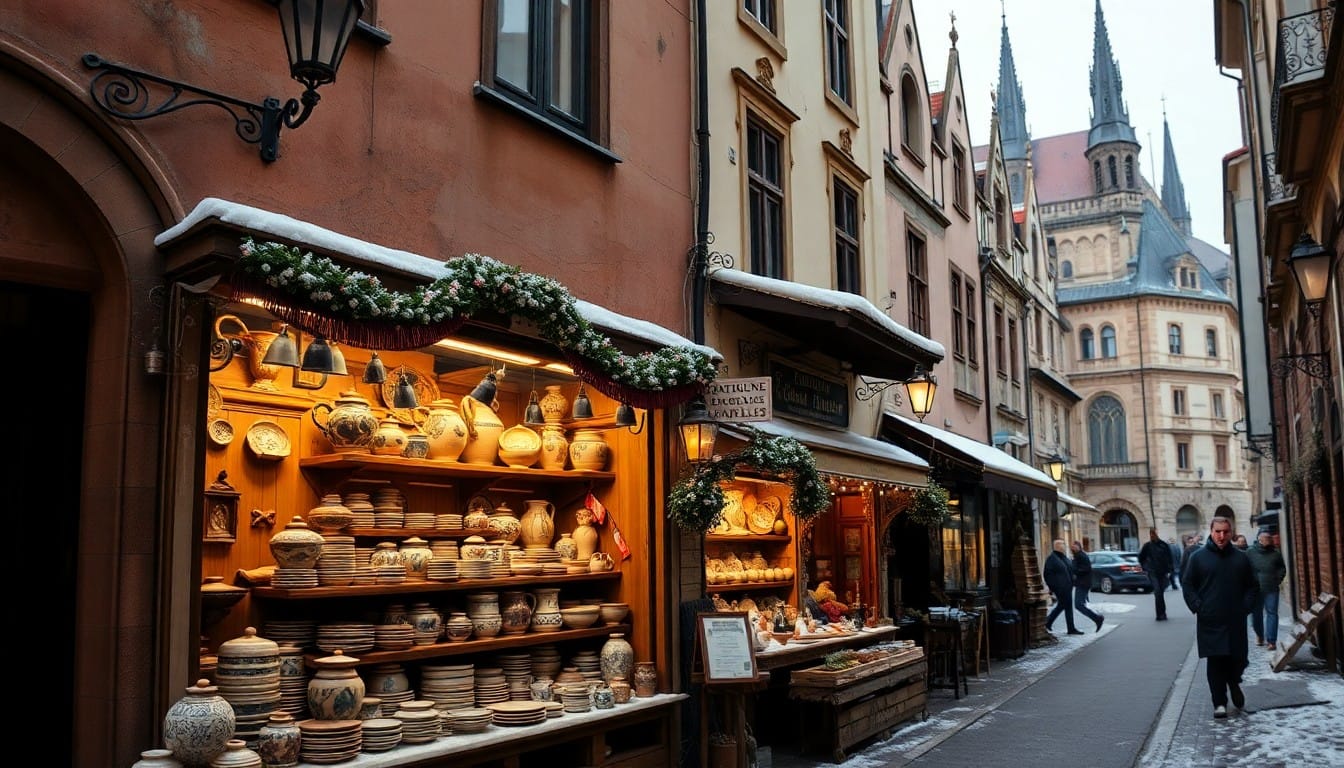
Prague is beautiful in a haunted kind of way. Gothic spires rising above every street, their black silhouettes like fingers pointing at the gray sky. Gargoyles watching from every corner, their stone faces weathered into expressions that seemed to shift when you weren't looking directly at them. The Charles Bridge crowded with statues of saints who died badly—martyred, beheaded, thrown from bridges—their bronze forms going green with oxidation, tourists rubbing certain spots for luck until the metal shines through. History here isn't something you visit in museums. It's the fabric of the city itself, visible and present and not always comfortable.
The Jewish Quarter stopped me cold. Prague's Jewish community was ancient, one of the oldest in Europe, and the Nazis had preserved it with a particular cruelty—they planned to build a "museum of an extinct race" here, a monument to their genocide. The synagogues survived for that reason, and now they're filled with the names of the murdered, tens of thousands of names covering every wall in a typography of loss. The cemetery is the part that most people talk about: twelve layers of graves stacked on top of each other because there was nowhere else to put the dead, headstones tilting at crazy angles, crowded so close together you can barely walk between them. The dead outnumber the living in that small space by a factor that defies comprehension.
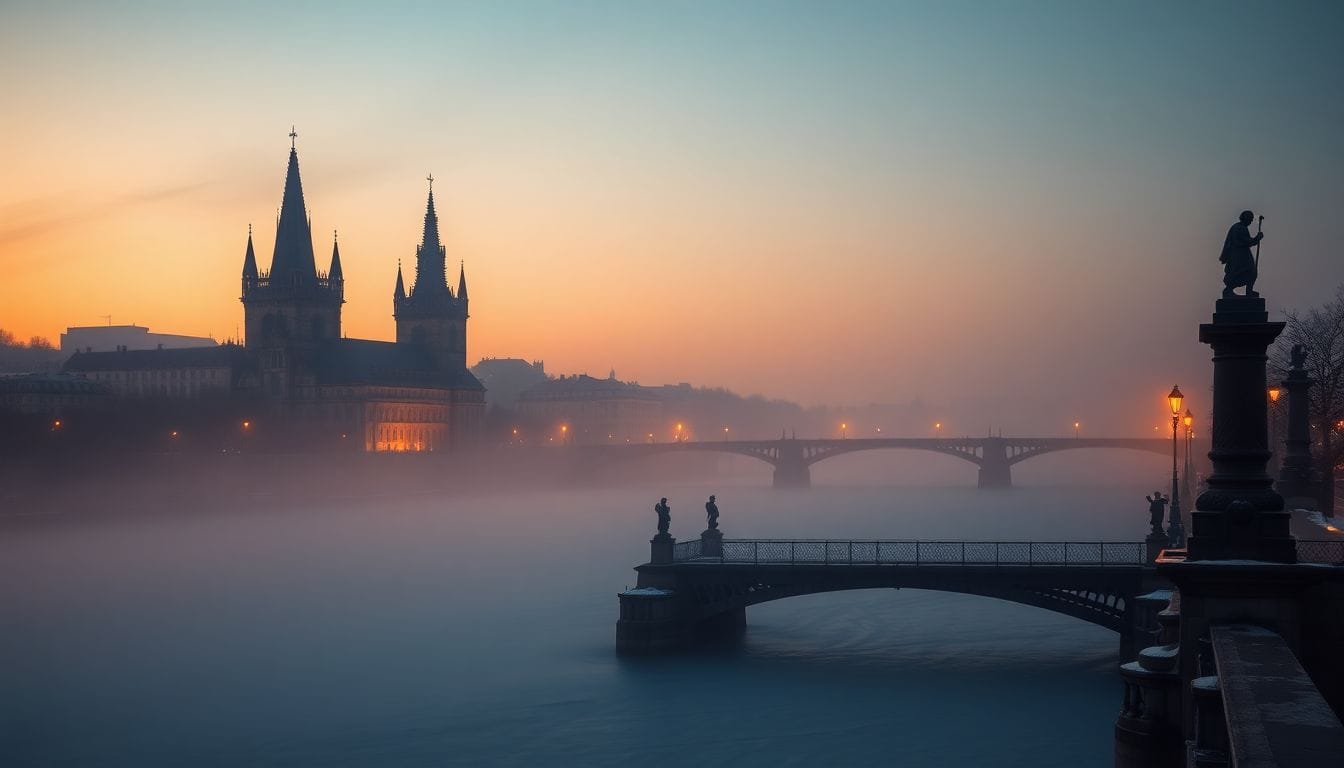
I walked more than I should have, given the cold. Through the Old Town with its astronomical clock—a medieval marvel that puts on a show every hour, mechanical figures emerging to mark the time—and across the bridge to the Lesser Town, where the buildings are smaller and the tourists fewer. Up the hill to the castle that overlooks everything, a complex of courtyards and churches and royal apartments that took centuries to build and feels it. My fingers went numb despite my gloves. My toes lost feeling somewhere around the third hour. I'd duck into a café to warm up, ordering soup I couldn't pronounce from menus I couldn't read, pointing at pictures and hoping for the best.
Prague is beautiful in a haunted kind of way. Gothic spires rise above every street, making you feel like you're walking through the Middle Ages.
The soup was always good. Czech cuisine in winter is built for survival: heavy broths thick with meat and vegetables, dumplings that fill you for hours, beer that warms you from the inside. I'd sit in these ancient cafés with their vaulted ceilings and worn wooden tables, steam rising from my bowl, slowly thawing, watching the locals go about their days. The rhythm of Prague was different from Barcelona—slower, more deliberate, people bundled into heavy coats and speaking a language I couldn't begin to parse. Czech sounds like nothing else to my ears, all consonant clusters and unfamiliar rhythms, beautiful in its strangeness.
There's something about Eastern European cities in winter. The streets empty earlier, people retreating to apartments and bars and the warmth of indoors as darkness falls—which happens around four in the afternoon in November. The ones who remain move quickly, bundled into themselves, their breath visible in the air. Street musicians play for smaller crowds, their fingers probably numb, their music a little more melancholy for the cold. You feel like you have the city to yourself, even when you don't. The tourists are there, of course, but fewer of them, and they move with the same urgency, the same desire to be inside.
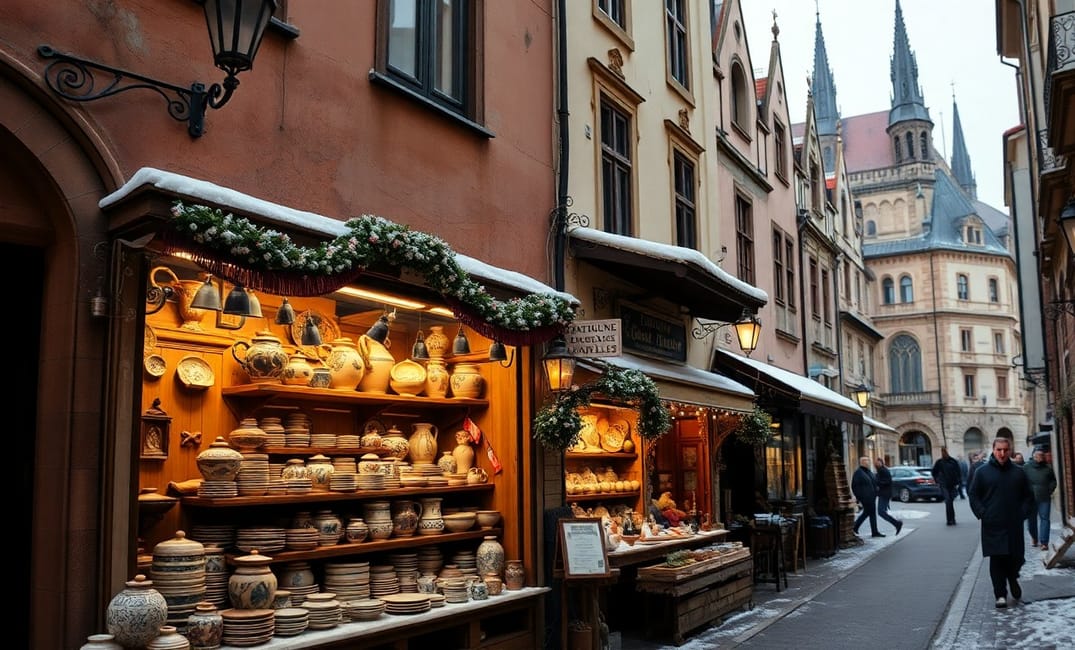
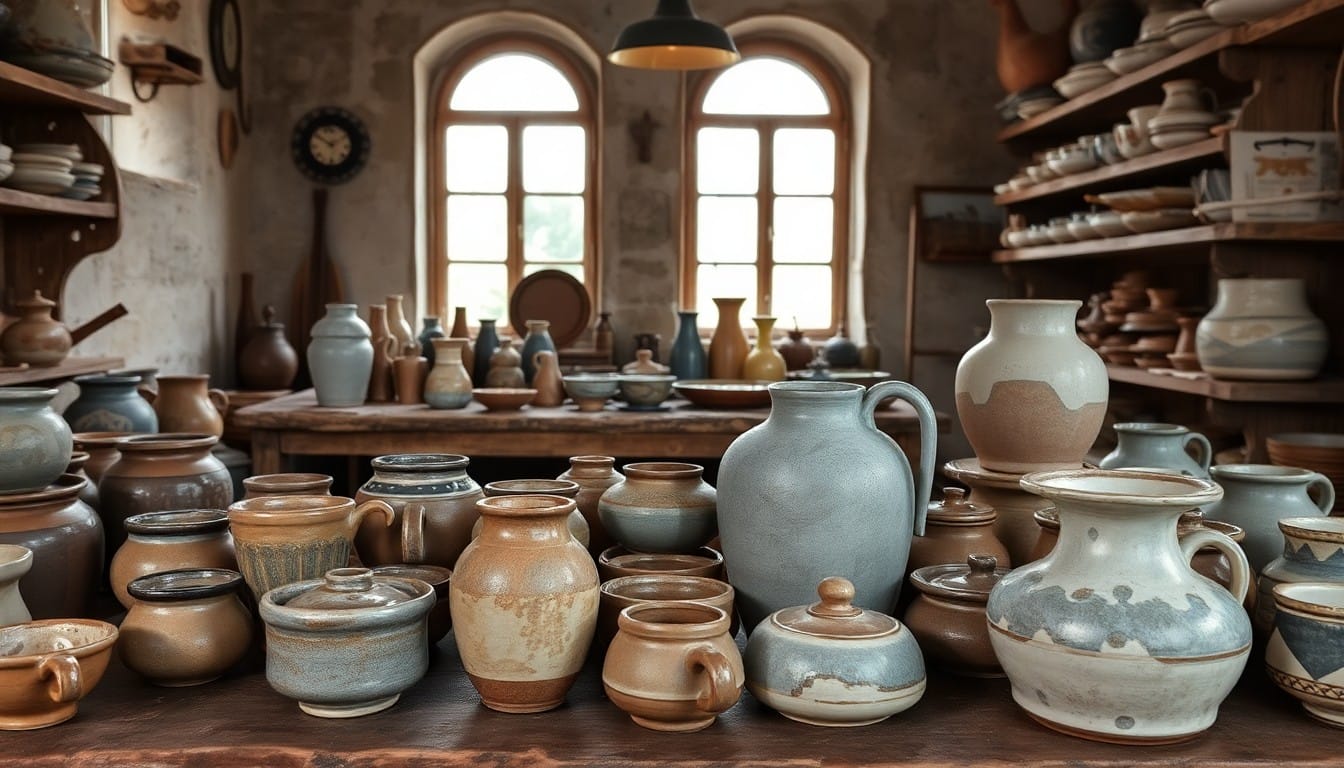
I found the ceramic in a shop I ducked into to escape the cold. It was on a narrow street somewhere in the Lesser Town, the kind of place that sells things tourists buy when they want something nicer than a t-shirt but don't know exactly what they're looking for. The window display was a jumble of pottery and glass and wooden toys—Czech craftsmanship marketed to foreign wallets. Inside was warmer than the street, which was reason enough to linger, and the shopkeeper was an older woman who smiled but didn't hover, letting me browse at my own pace.
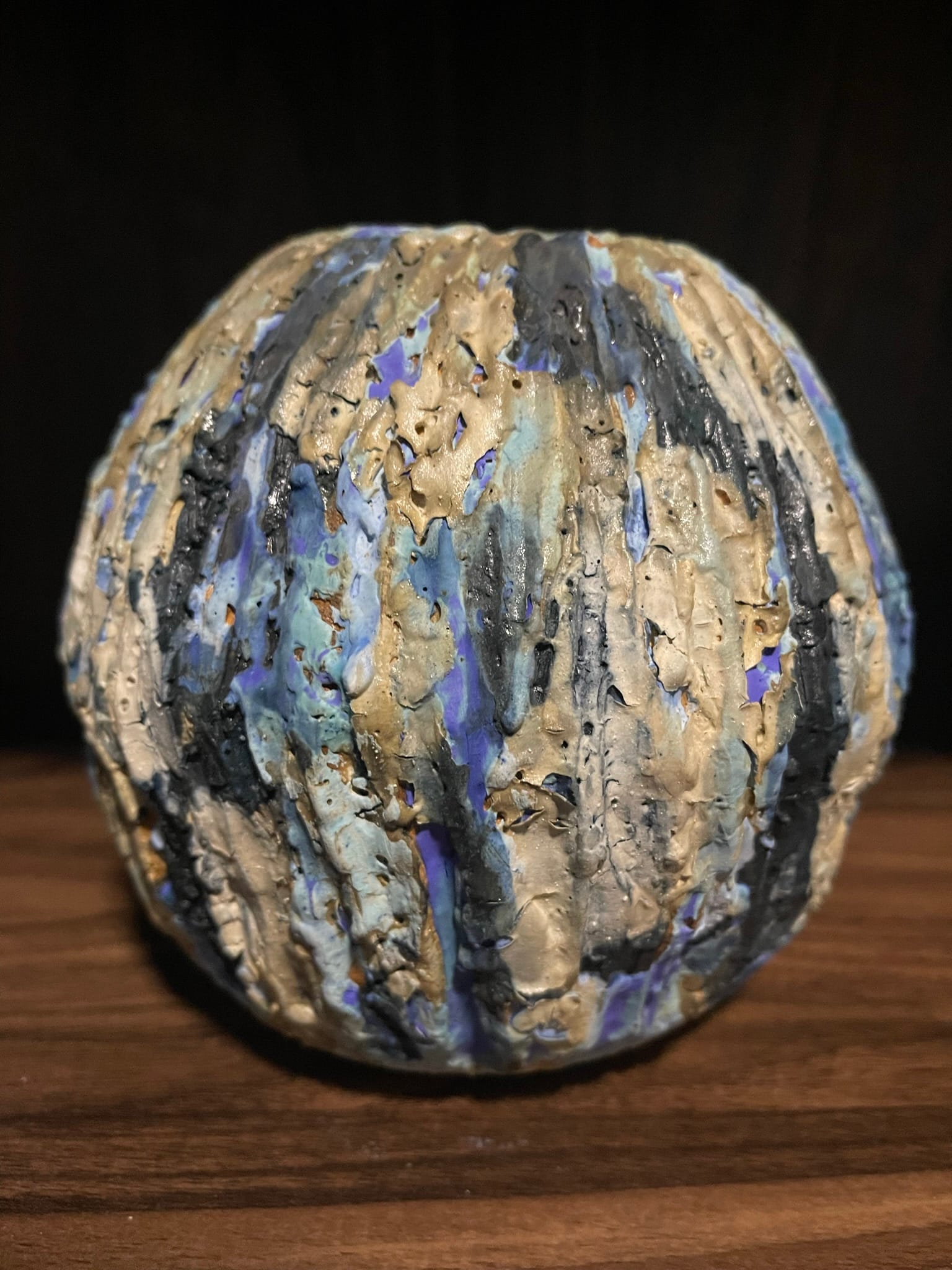
The piece that caught my eye was a small vase, maybe five inches tall, spherical with organic ridges running around its surface like waves frozen mid-motion. The glaze was extraordinary—blues and purples that shifted and swirled into each other, no two sections quite the same color, the whole thing looking almost volcanic, like something created by geological processes rather than human hands. I picked it up and it fit in my palm perfectly, dense and cool to the touch.
The shopkeeper wrapped it carefully in paper while I stomped my feet trying to get feeling back. She said something about the glaze technique, how the colors depended on the temperature of the kiln, how each piece came out slightly different because you couldn't fully control the chemical reactions that produced those particular blues. I nodded along, understanding maybe half of it, too cold to ask follow-up questions. The piece was beautiful; the explanation was interesting but secondary. I paid in euros—they took both, pragmatic about currencies—and tucked the wrapped vase into my bag, already worrying about getting it home intact.
The vase has blues and purples that shift depending on the light. It reminds me of that weekend, the beautiful cold, the city that was worth the discomfort.
That evening I found a restaurant in the old town, up a narrow flight of stairs to a room with low ceilings and a fireplace that actually worked. I ate something involving pork and dumplings and sauerkraut—traditional Czech food, heavy and warming, exactly what the weather required. The beer came in half-liter glasses, which seemed appropriate for the portion sizes of everything else. By the time I finished, the cold seemed less hostile, more like a fact of the environment to be managed rather than a personal assault.
Prague deserves another visit, probably in summer when I can actually feel my fingers. The city has a reputation for beauty that I only glimpsed through chattering teeth—the architecture I rushed past to find warmth, the restaurants I was too frozen to wait in line for, the views from the castle that I didn't linger over because the wind was too much. There's a whole Prague I missed, the one that exists when the weather cooperates, when you can sit by the river and watch the boats go by, when the outdoor cafés are actually usable.
But I'm glad I went in winter anyway. The city showed me a different face—quieter, more introspective, wrapped in scarves and waiting for spring. The tourists were fewer, the locals more visible, the whole place felt realer somehow. I saw Prague at its most challenging, when beauty required effort to appreciate, when comfort wasn't guaranteed. That matters. Easy beauty is easy to forget. Beauty that you had to work for, that you experienced through discomfort, stays with you differently.
The ceramic vase sits on my shelf now, those blues and purples catching light from my window. The colors really do shift depending on the angle—sometimes more blue, sometimes more purple, occasionally showing hints of green or gray that I didn't notice in the shop. It's the kind of piece that reveals itself over time, that looks different every time you really look at it. It reminds me of that weekend, the beautiful cold, the soup that saved me, the cemetery of stacked graves, the city that was worth the discomfort. Not every trip needs to be comfortable to be worthwhile. Sometimes the hard ones teach you the most.