


Table of Contents
The pharmacies had no drugs. The restaurants served a quarter of their menus. And if you needed a taxi to the airport, you booked it days in advance—because the drivers weren't sure they could find gasoline.
The heat was the first thing I noticed after the beauty—thick and wet and inescapable, the kind of heat that makes you reconsider every life choice that led you to this moment. I'd come from the relative cool of the Andean highlands, from Bogotá's eternal spring, and the coastal climate was a shock. By ten in the morning the streets were uncomfortable; by noon they were nearly impassable. You learned the rhythm quickly: do everything early, retreat to shade or air conditioning for the worst of the afternoon, emerge again as the sun began to drop and the heat became merely oppressive rather than lethal.
Colombian cigars rivaled Cuban ones—that was the first surprise. The tobacco industry here had been overshadowed by its neighbor's fame, but the quality was undeniable. I sat on rooftop terraces in the evenings, smoking cigars purchased from old men in tiny shops, watching the sun set over the Caribbean and the city walls. The rum was excellent too, mixed with fresh-squeezed juices, served in glasses sweating with condensation. There was a colonial decadence to those evenings that I leaned into fully, understanding that this wasn't sustainable as a lifestyle but enjoying it as a vacation.
The street vendors were everywhere, selling everything. Fresh fruit cut to order—mango with lime and chili powder, papaya that tasted nothing like the bland versions at home, fruits I'd never seen before with names I couldn't pronounce. Ceviche served in plastic cups, the fish caught that morning and cured in lime juice right before your eyes. Arepas filled with cheese or egg or meat, the cornmeal cakes that are to Colombia what bread is elsewhere. Old women wandered through the plazas with trays of candied coconut balanced on their heads, calling out prices in a musical Spanish I could barely understand. The city was a marketplace in motion, commerce happening at every corner, the economy visible and participatory in a way that modern Western cities have largely lost.

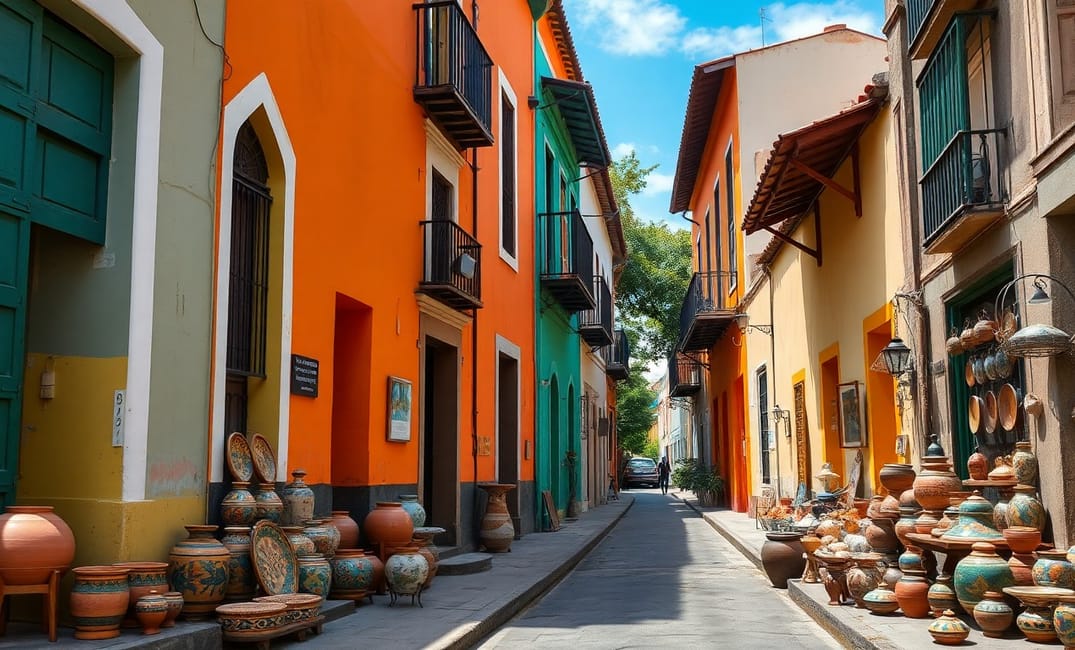
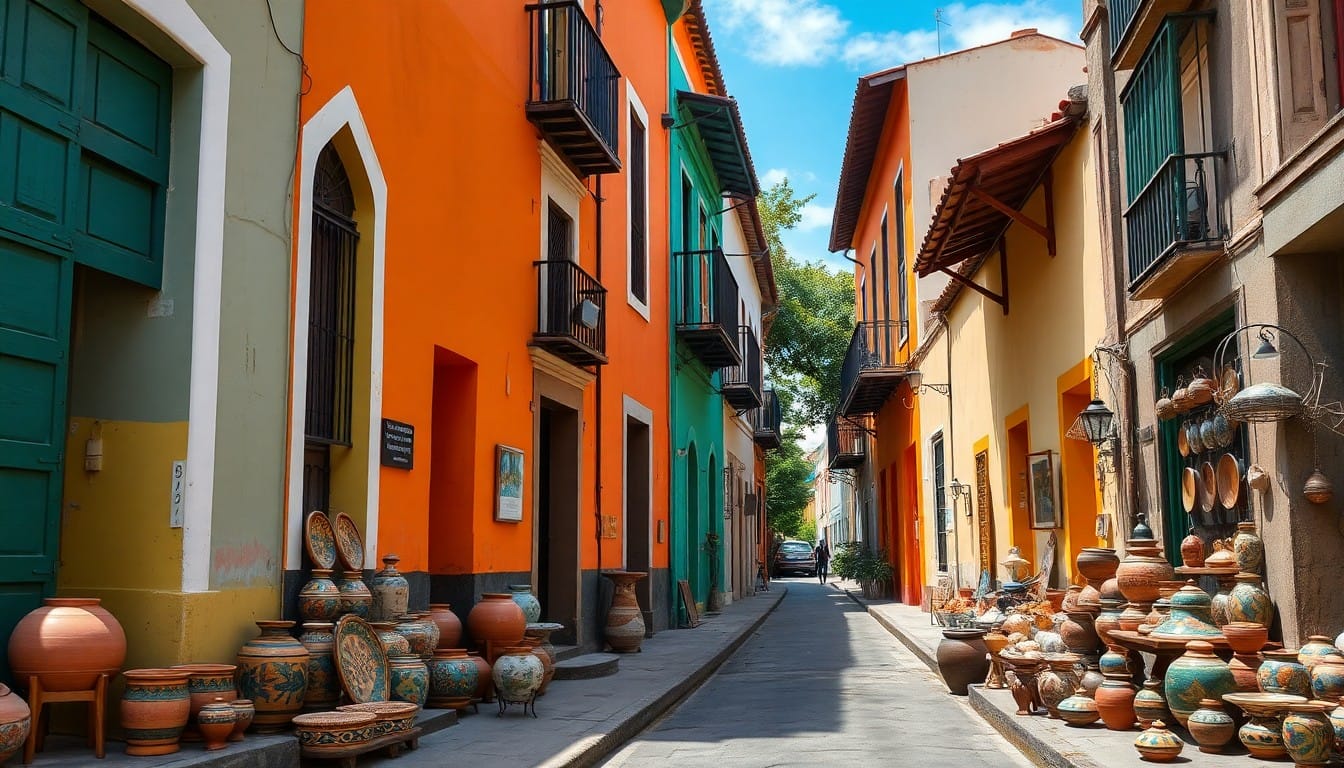
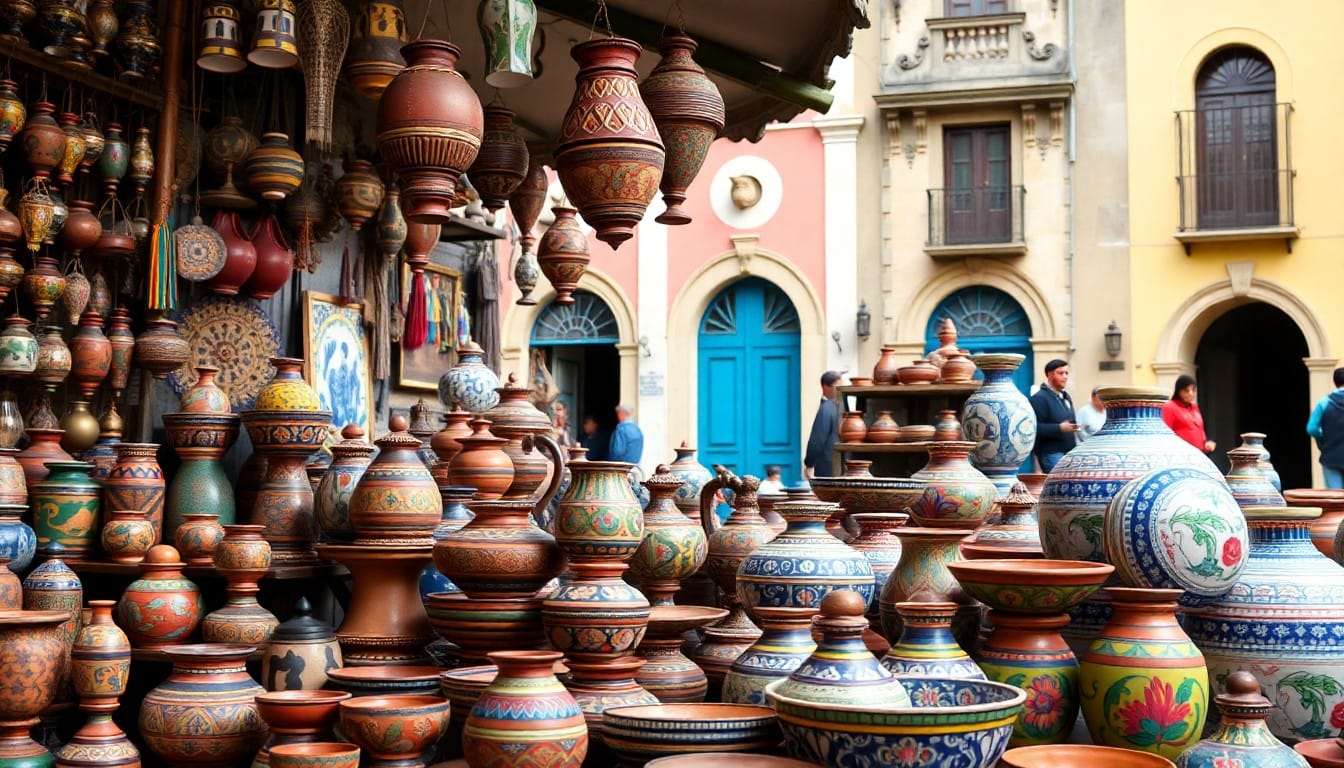
I found the ceramics in a gallery just inside the city walls, a shop that was trying to distinguish itself from the tourist kitsch without pricing out regular travelers. The woman who ran it had a curatorial eye—everything on display was handmade, she explained, from artisans throughout Colombia. She'd spent years traveling the country, finding potters and weavers and woodworkers whose work deserved a wider audience, bringing their pieces to Cartagena where tourists with money could find them. It was cultural entrepreneurship with a conscience, and I appreciated both the aesthetic and the ethics.
Cuba teaches you what scarcity actually means. Not the Instagram version of minimalism where you choose to own less, but the real thing—where choice has been stripped away.
Colombian folk art ceramic has a distinctive style: vibrant tropical colors—oranges and yellows and greens—applied in patterns that draw on indigenous and African traditions as well as Spanish colonial influences. The country's history is written in its craft: the native peoples who were here first, the enslaved Africans brought to work the colonial economy, the Spanish who built empires on both their backs. The pieces in her shop ranged from functional to purely decorative, from small objects you could tuck into a pocket to large vessels that would require shipping. I spent an hour there, asking about origins and techniques, learning more than I expected about the geography of Colombian craft.
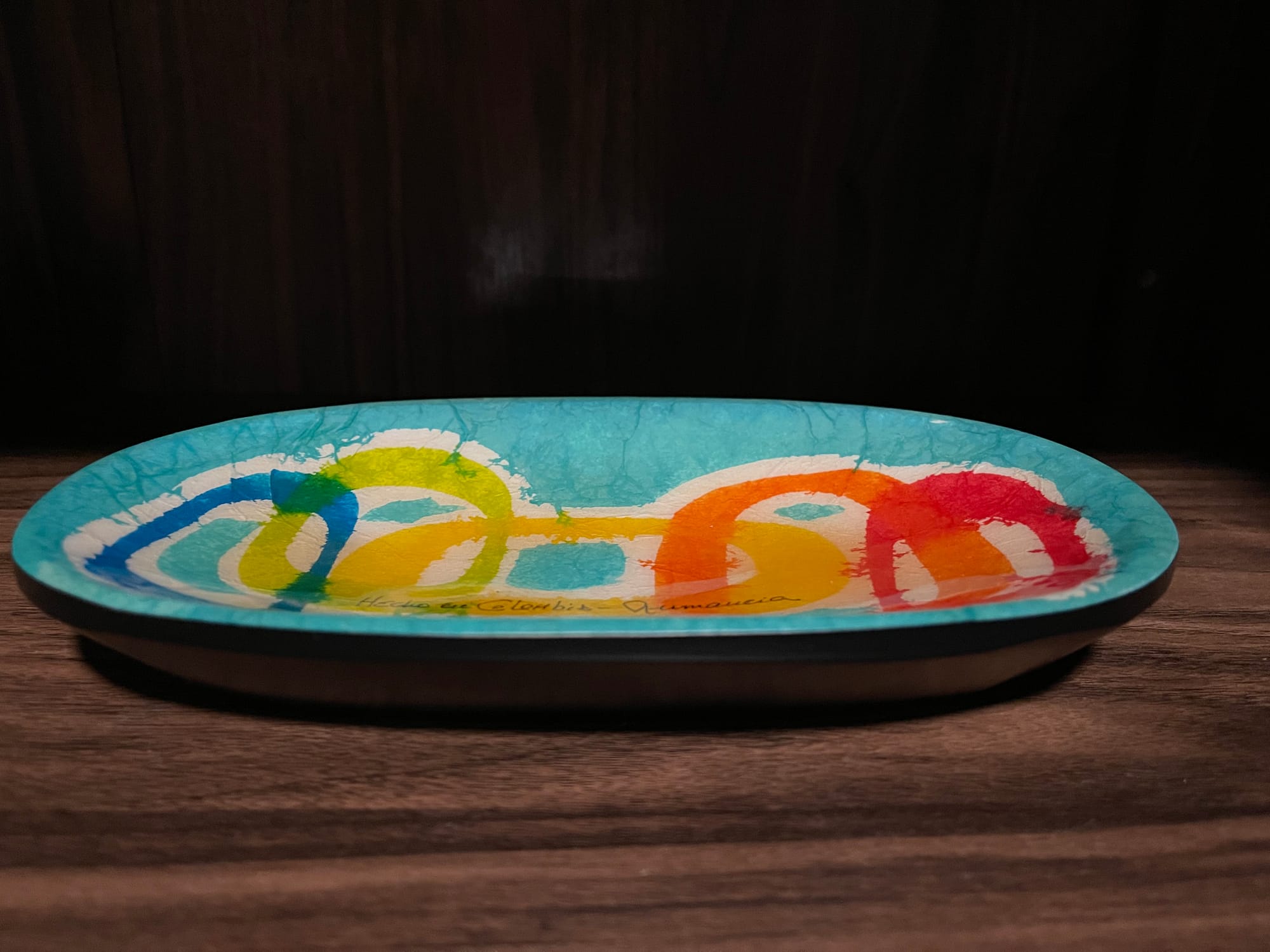
The piece I chose was made by an artisan collective in the countryside outside Cartagena, women who'd formed a cooperative after the violence of the civil war had disrupted their traditional ways of life. The ceramic was a small figure—I'm not sure what to call it, not quite a vase, not quite a sculpture—painted in the bright colors characteristic of Caribbean Colombia. There were fish and flowers and abstract patterns, the whole surface covered with decoration that somehow avoided feeling cluttered. It was joyful in a way that felt hard-won, beauty created by people who'd seen enough ugliness to know beauty's value.
Cartagena's history is complicated, like all of Colombia's history. The walled city was built as a fortress, protecting the gold and silver that flowed through the port on its way to Spain. Slaves were brought here from Africa, their labor building the wealth of empire, their descendants still visible in the Afro-Colombian population that gives the coast its cultural distinctiveness. The city has been attacked and defended, conquered and liberated, romanticized and neglected. The beauty I saw was built on foundations I couldn't always see, on suffering that predated me by centuries.
The evening I bought the ceramic, I walked the city walls at sunset, a circuit of the old city that took about an hour. The Caribbean stretched out on one side, the historic center on the other, the light turning everything golden and then pink and then deep purple as the sun descended. Couples sat on the cannon mounts, sharing bottles of wine and watching the same view I was watching. Street musicians played somewhere below, the sound floating up through the tropical air. It felt like the ending of something, though I wasn't sure what—the trip, maybe, or a certain period of my life, or just the day.
That ambiguous face stares out with an expression I still can't read—serene or sad or simply patient, the look of someone who has learned to wait for things that may never come.
The ceramic sits on my shelf now, tropical colors incongruous against the neutral tones of my apartment. It's the kind of piece that draws comments when people visit—"Where did you get that?"—and the explanation leads to stories about Cartagena, about the heat and the cigars and the woman who collected folk art and the history that complicates the beauty. That's what I want from the objects I bring home: not just decoration but conversation, not just beauty but meaning. The Colombian piece delivers on both.
Colombia surprised me. The reputation for danger—earned decades ago, largely outdated now—had made me cautious before arriving. But Cartagena was welcoming, gorgeous, alive with a culture that refused to be defined by its darkest chapters. The ceramic I brought home is a piece of that resilience: art made by women who'd survived what many people don't, beauty created despite everything that argued against beauty. It reminds me that the human capacity for joy is indestructible, that color and form and craft persist even when—especially when—circumstances give every reason to abandon them. That's the lesson of Colombia, or at least the lesson I took from it. The lesson the ceramic holds.
I took a day trip to the Rosario Islands, a chain of coral islands about an hour by boat from Cartagena. The Caribbean there was impossibly clear, the kind of water that makes you understand why pirates chose this coast, why the Spanish built their treasure fleet routes through here. I snorkeled over coral gardens and saw fish in colors I didn't know existed outside of aquariums. The boat back to Cartagena passed the old fortress of San Felipe, its walls still standing after centuries of attacks and hurricanes, a reminder that this beautiful place was built for war as much as trade.
My last night in Cartagena, I ate dinner at a restaurant in the old city, a place recommended by another traveler I'd met. The ceviche was perfect—the fish caught that day, the lime juice fresh-squeezed, the presentation simple and beautiful. I sat alone at a table by the window, watching the street performers and the tourists and the locals going about their evening, feeling the particular melancholy of a trip's end. The ceramic in my bag was wrapped and ready for travel, its bright colors hidden for now but waiting to emerge again on a shelf far from here.