


Table of Contents
Stockholm surprised me. I expected cold efficiency, Scandinavian reserve, a city of blonde people minding their own business. What I found was designed within an inch of its life—but warm in ways I hadn't anticipated.
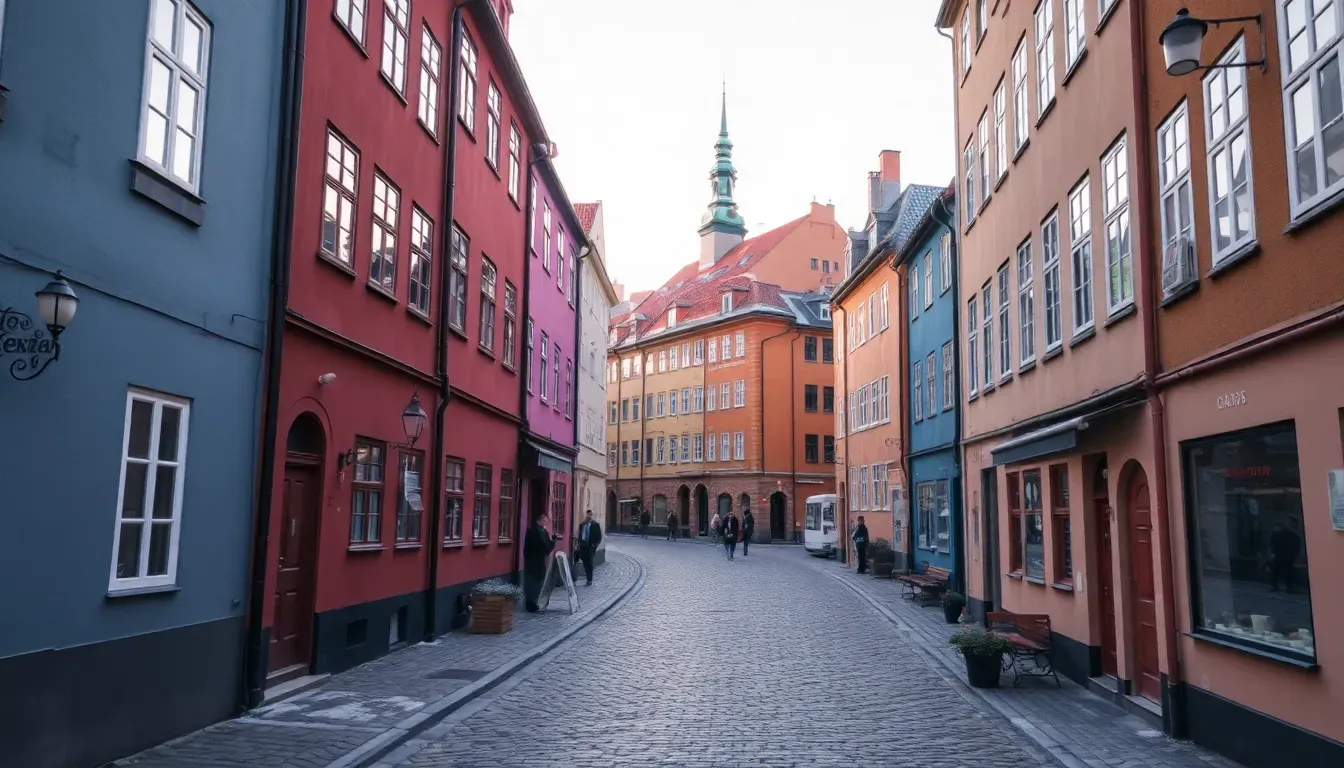
Stockholm surprised me from the moment I stepped off the train from the airport. The city rises from the water in a way that feels almost impossible—fourteen islands connected by bridges, the Baltic Sea threading through everything. The buildings along the waterfront were painted in soft yellows and oranges and reds, colors that seemed designed to compensate for the gray sky above them. Even in the depths of winter, there was a warmth to the palette that I hadn't anticipated.
I spent my first day just walking. The cold was sharp but manageable—I'd learned my lesson about packing after Prague—and the streets had a quietness to them that felt almost meditative. Swedes don't do small talk, I'd heard, and that reputation proved accurate. People moved with purpose, bundled into themselves, not unfriendly but not seeking connection either. After the chaos of Barcelona's streets, the near-silence was both unsettling and deeply peaceful.
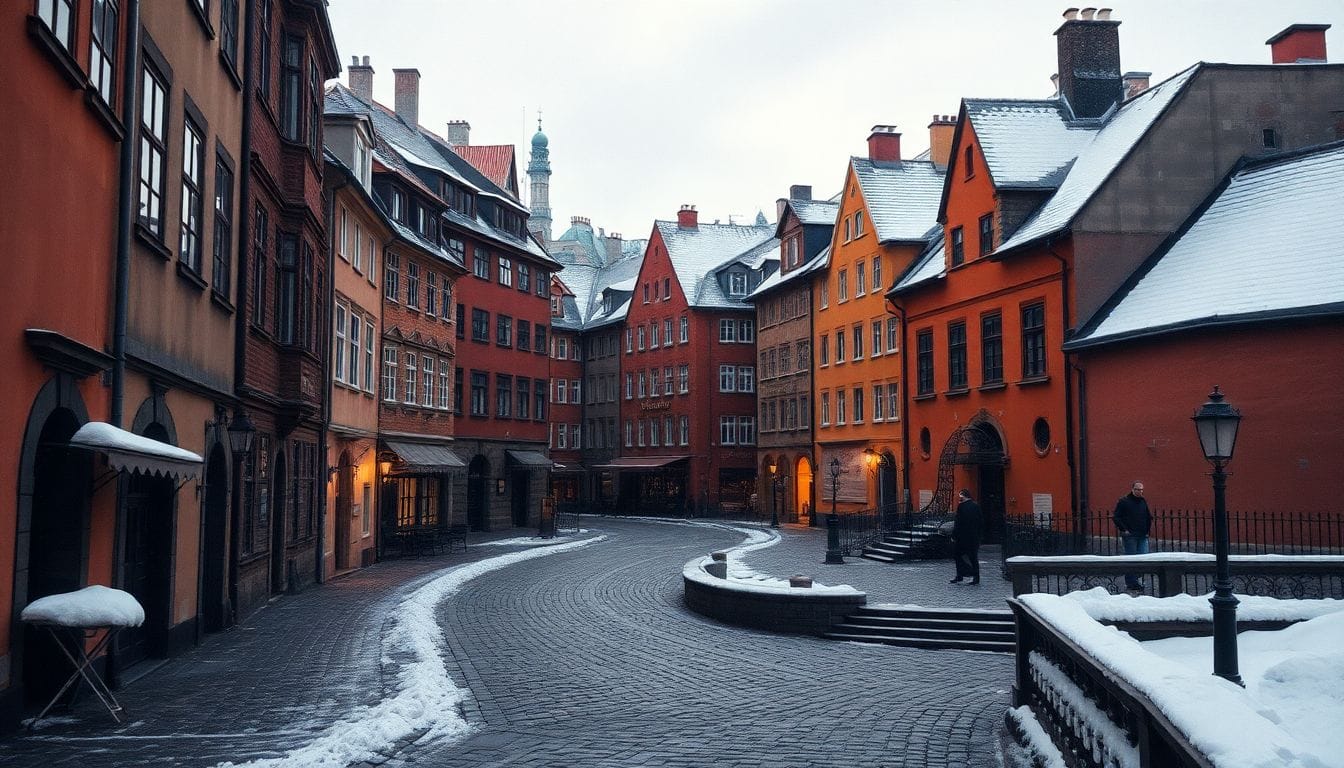
Gamla Stan, the old town, is where Stockholm's medieval past survives. The streets there are so narrow that you can almost touch both walls if you stretch out your arms. Buildings lean toward each other overhead, blocking what little light makes it down to street level. Everything is cobblestoned, worn smooth by centuries of feet. I wandered through alleys that seemed to lead nowhere, past doorways painted in colors that had faded to soft pastels over hundreds of years. There's a particular smell to old European cities in winter—stone and cold air and the faint sweetness of wood smoke from somewhere unseen.
The ceramics shop was on a side street so small I almost missed the entrance. It was called something I couldn't pronounce, the name hand-painted on a wooden sign that creaked in the wind. The window display was sparse—Scandinavian design in action, I suppose—just a few carefully arranged pieces on a clean white surface. I stepped inside mostly to escape the cold, my fingers numb despite my gloves.
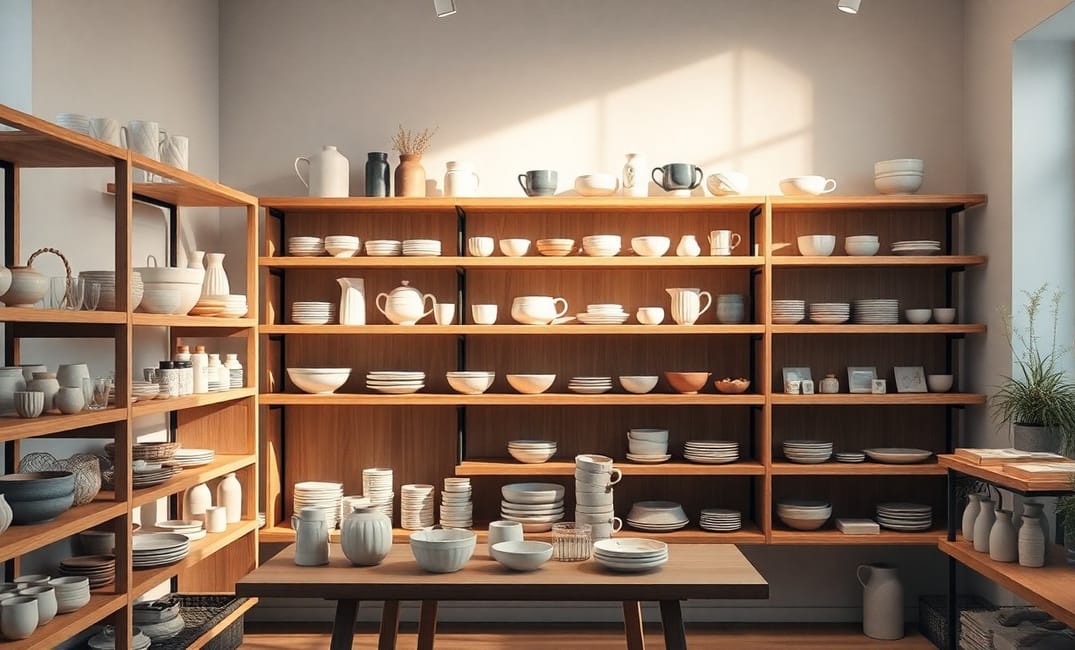
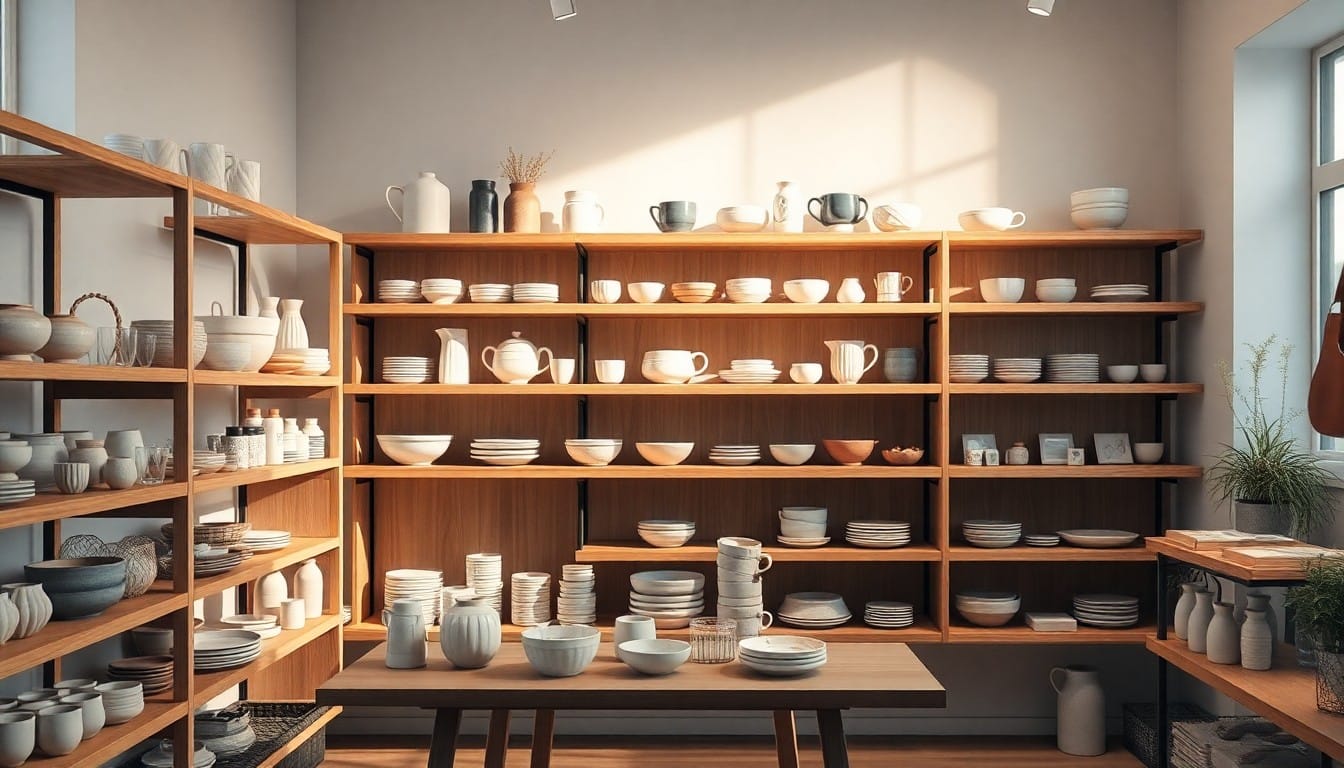
The woman who ran the shop was exactly what you'd expect: tall, blonde, with the kind of effortless elegance that Scandinavians seem to be born with. She greeted me with a nod and then left me alone to browse, which I appreciated. The shop was small but every piece had clearly been chosen with intention. There was no clutter, no excess—just ceramics arranged on wooden shelves with enough space between them to breathe.
The subway stations are art installations, each one unique. The Swedes decided infrastructure should be beautiful, and they followed through.
Swedish pottery is different from what I'd collected elsewhere. Mediterranean pieces—Moroccan tiles, Spanish cups—are bold and assertive, demanding attention with their colors and patterns. Scandinavian ceramics whisper instead. The shapes are clean and essential, reduced to their most fundamental forms. The glazes tend toward earth tones and soft blues, colors that don't compete with their surroundings but complement them. There's a philosophy embedded in these pieces about simplicity and function, about beauty that emerges from restraint rather than abundance.
The bowl that caught my eye was sitting on a middle shelf, almost hidden between larger pieces. It was small—maybe six inches across—with a slightly irregular rim that spoke to its handmade origins. The glaze was a soft grayish-blue, speckled with darker flecks that seemed to shift depending on the angle. The inside had a gentle concave curve that felt organic, like something shaped by water rather than hands. I picked it up and was surprised by its weight—heavier than it looked, substantial in a way that suggested it was made to be used, not just admired.
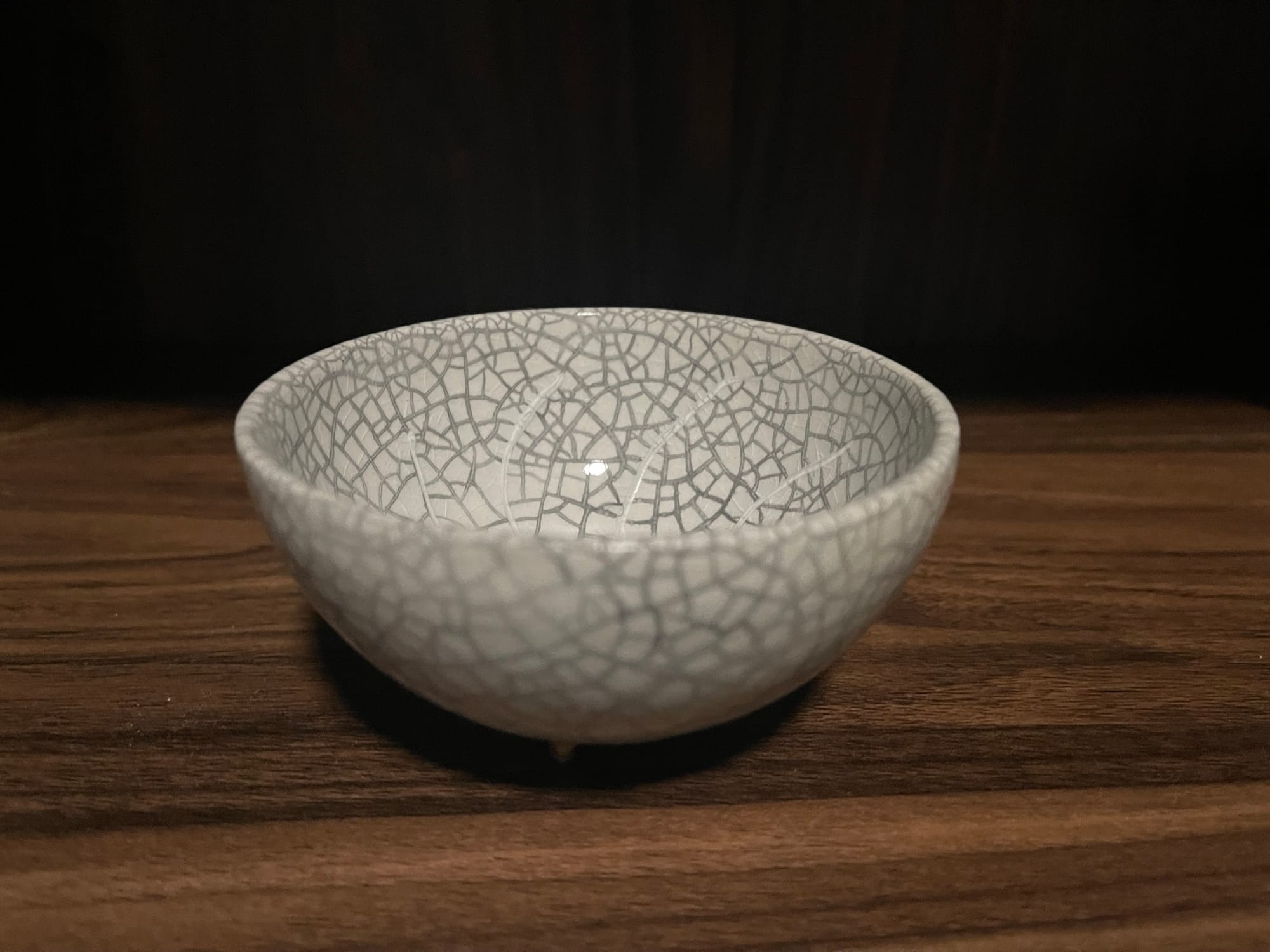
The shopkeeper noticed me examining it. She came over and explained, in perfect English, that it was made by a potter in the countryside outside Stockholm, a woman who'd been working with clay for forty years. The glaze, she said, was developed to evoke the color of the Baltic Sea in winter—that particular gray-blue that sits between the frozen water and the overcast sky. I nodded, turning the bowl in my hands. The bottom had a small stamp pressed into the clay, the maker's mark.
I bought the bowl without hesitating. It cost more than I should have spent—Swedish prices are no joke—but there was something about it that felt necessary. Maybe it was the way the glaze reminded me of the sky I'd been walking under all day. Maybe it was the weight of it, the sense that someone had spent decades perfecting their craft before making this particular piece. Or maybe I just needed something to show for this detour, a physical object I could carry home to remind me that I'd been somewhere cold and beautiful and utterly foreign.
The rest of my time in Stockholm passed in a similar rhythm. I visited the Vasa Museum, where a seventeenth-century warship sits fully intact after being raised from the harbor floor—preserved by the cold, dark water for three hundred years. I walked through the royal palace, rooms filled with furniture and tapestries from centuries of Swedish monarchy. I ate gravlax and pickled herring and drank coffee in cafes where the locals sat in silence, each person absorbed in their own thoughts. The concept of fika—the Swedish coffee break tradition—makes more sense when you experience it. It's not about the coffee, really. It's about pausing, about creating space in the day for stillness.
The bowl is just a bowl, well-made, doing its job quietly. I notice it when I reach for an apple, appreciate it briefly, then go about my day.
On my last evening, I found myself back in Gamla Stan as the sun was setting—which happened, in February, around three-thirty in the afternoon. The streets were emptying as people headed home, and the lights in the shop windows cast warm rectangles onto the cobblestones. I stood on a small square watching the light fade, the cold seeping through my coat, thinking about how different this place was from everywhere else I'd been.
The Scandinavian approach to life is sometimes misunderstood as coldness or unfriendliness, but that's not quite right. It's more like a respect for solitude, an understanding that not every moment needs to be filled with chatter and connection. There's a comfort in being alone that's built into the culture here, a recognition that silence can be companionable rather than awkward. I'd grown up in a world where empty space was something to be filled, where quiet meant something was wrong. Stockholm taught me that quiet could also mean everything was exactly as it should be.
The bowl sits on my shelf now, holding whatever small items need a place to live—a few coins, a spare key, a button that fell off something I've since forgotten. Sometimes I pick it up and feel its weight in my hands, run my thumb over that speckled gray-blue glaze, and I'm back in that narrow shop with the creaking sign, watching the winter light fade outside the window. The ceramics I collect from my travels are memory containers, each one holding a particular place and time. This bowl holds Stockholm in February: the pale light, the quiet streets, the cold that made everything feel more vivid somehow. It holds the lesson I learned there, about the beauty of restraint, about making space for stillness in a life that always seems to be rushing forward.
I think about going back someday, maybe in summer when the sun barely sets and the city transforms into something else entirely. They say Stockholm in June is practically unrecognizable—the parks full of people, the outdoor cafes spilling onto sidewalks, the whole country emerging from winter hibernation. But part of me is glad I saw it the way I did, stripped down to its essentials, gray and cold and quietly beautiful. That's the version of the city that the bowl remembers, and that's the version I carry with me still.