


Table of Contents
There was an earthquake one afternoon while I was napping. Magnitude 5.6. I woke up to the bed shaking and thought with complete clarity: this is how it ends. Then it stopped, and everyone went back to what they were doing.
The first trip was with law school friends, the kind of chaotic group vacation where everyone has different ideas about what constitutes a good time and nobody wants to be the one to make decisions. We stayed in Seminyak initially, the party beach, where Australian tourists tan by day and drink by night and the vibe is more Spring Break than spiritual awakening. I didn't mind it—there's something to be said for beach clubs and cold Bintangs and nights that blur into mornings—but that wasn't the Bali that would stay with me.
Bali is one of the most magical, amazing places I've been. The culture runs deeper than anywhere I've traveled—Hinduism infused into every aspect of daily life, offerings placed on sidewalks and doorsteps and dashboards of cars, incense burning at every corner, temples rising from the jungle and the rice fields and the city streets alike. The Balinese believe their island is the dwelling place of gods, and when you're there, it's not hard to understand why they might be right.
The people are so friendly it almost feels suspicious at first, when you're used to the transactional interactions of Western tourism. Shopkeepers who don't pressure you, locals who genuinely seem pleased that you've come to visit their home. They scooter around everywhere, whole families balanced on a single motorcycle—father driving, mother behind him holding an infant, toddler wedged between them—weaving through traffic with a casualness that would give an American parent a heart attack. The sound of motors is the background hum of Balinese life, mixing with the cries of roosters and the distant gamelan music drifting from some unseen ceremony.
Getting on a scooter myself and driving through the streets was a revelation. You're part of the flow then, not watching it from behind glass. You smell the food vendors on every corner—satay grilling, rice cooking, the sweetness of tropical fruit mixing with gasoline fumes and incense. You see animals in cages sadly going to market, chickens and pigs and sometimes things you'd rather not identify, the reality of where food comes from presented without sanitization. You're really part of the beating heart of the world in Bali. It's a very religious place, yes, but the religion here isn't separate from the rest of life—it's woven into everything, the sacred and the profane existing side by side without contradiction.
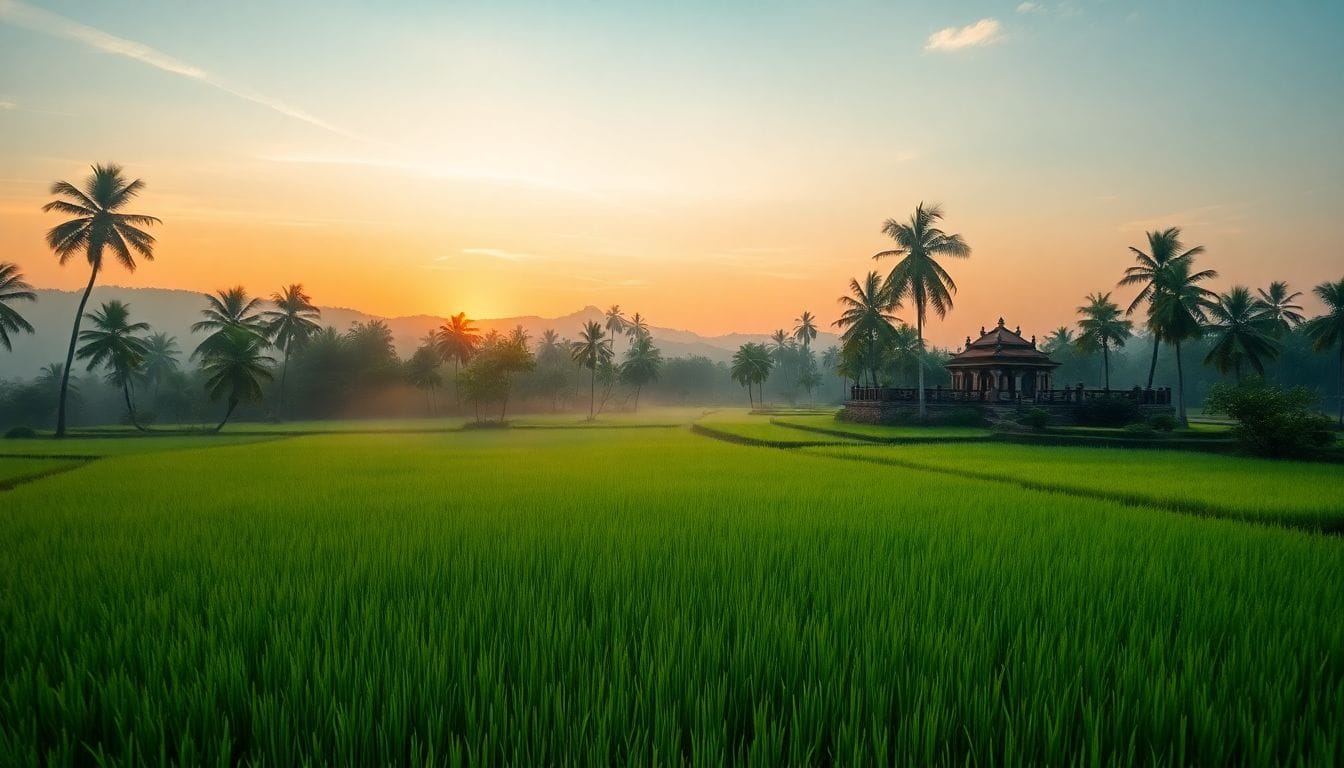
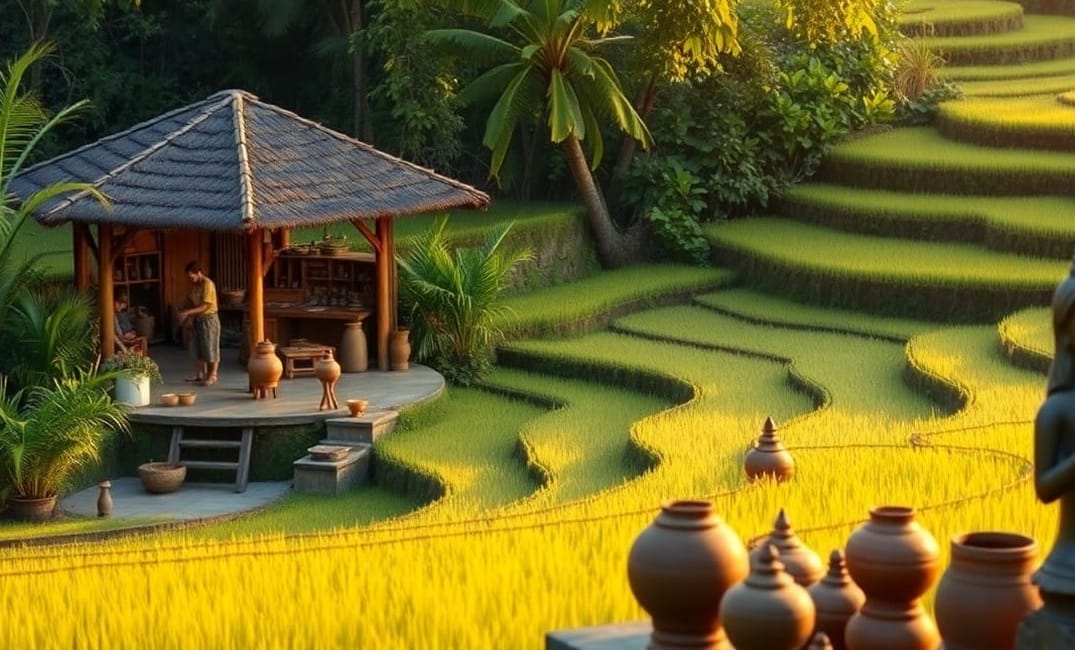
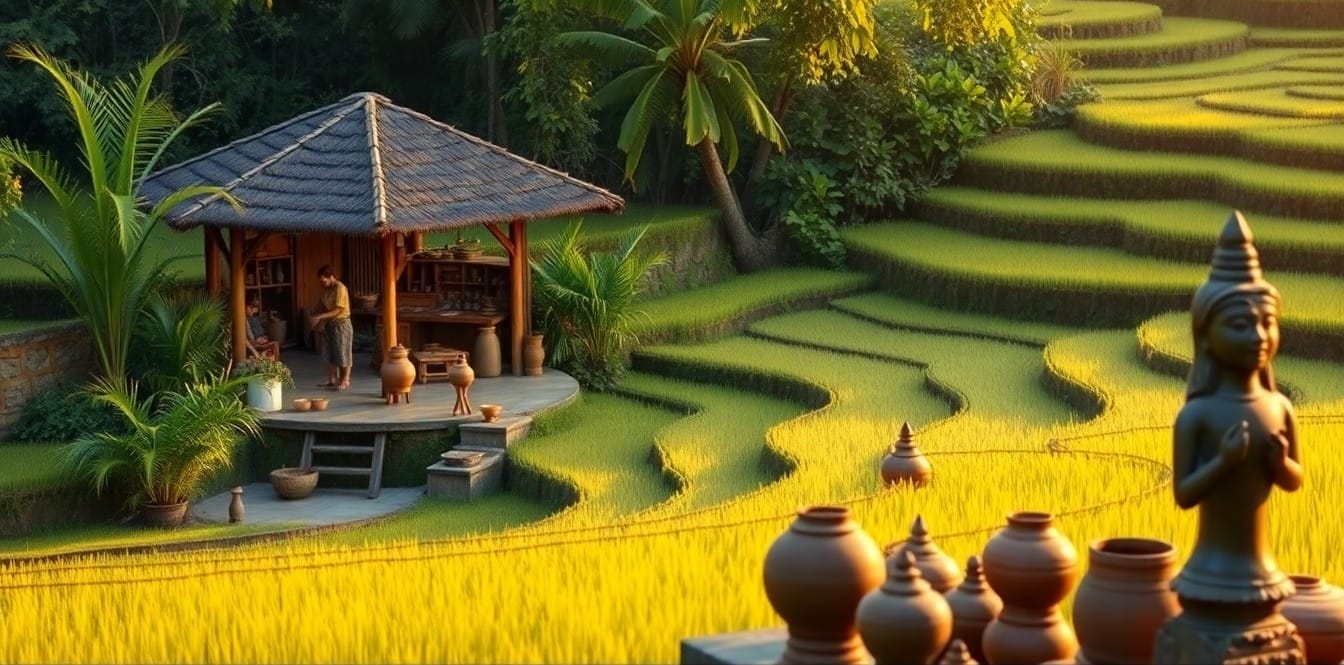
The rice paddies are what I think of when I remember Bali—those impossibly green terraces carved into hillsides, each level reflecting the sky like a series of mirrors descending toward the valley. The UNESCO ones in Tegallalang are tourist-mobbed now, Instagram influencers posing on every wooden swing, but even there the beauty breaks through. And if you drive further, into the villages where tourists don't bother going, you find the paddies as they've been for centuries—farmers in conical hats working the fields by hand, water buffalo wading through the shallow pools, the only sounds the splash of irrigation water and the wind through the coconut palms.
Bali changes you if you let it, or maybe it just reveals what was always there. Both times I came back different than I left.
There's nothing like walking by those rice paddy fields at dawn. The air is still cool, the light soft and golden, mist rising from the warm water. You're so close to life and how people live—not life as an abstraction but life as daily labor, as hands in earth and water, as the ancient rhythm of planting and growing and harvesting that humans have followed since we first stopped wandering. The modernity of Bali—the hotels and clubs and restaurants catering to Westerners—is layered on top of something much older, and if you pay attention you can feel that older thing pulsing underneath.
The earthquake happened on the second trip, several years later. I was in Ubud then, the artsy heart of the island, staying at the Ritz Carlton for three days that were, let's just say, eventful. The Ritz in Ubud is absurd in the best way—villas with private pools overlooking the jungle, outdoor bathtubs where you soak while watching monkeys swing through the trees, staff who remember your name and your preferences and appear silently whenever you need anything. It's the kind of place that makes you question everything you thought you knew about how life can be lived.
I was napping in my villa when the shaking started. At first I thought I was dreaming—the bed moving, the walls creaking, the jungle outside suddenly full of screaming birds. By the time I realized what was happening, it was already over. 5.6 magnitude, centered somewhere in the mountains, strong enough to rattle the windows but not to do real damage. I stepped outside and found the staff already checking on guests, calm as always, as if earthquakes were just another thing to be managed like room service requests.
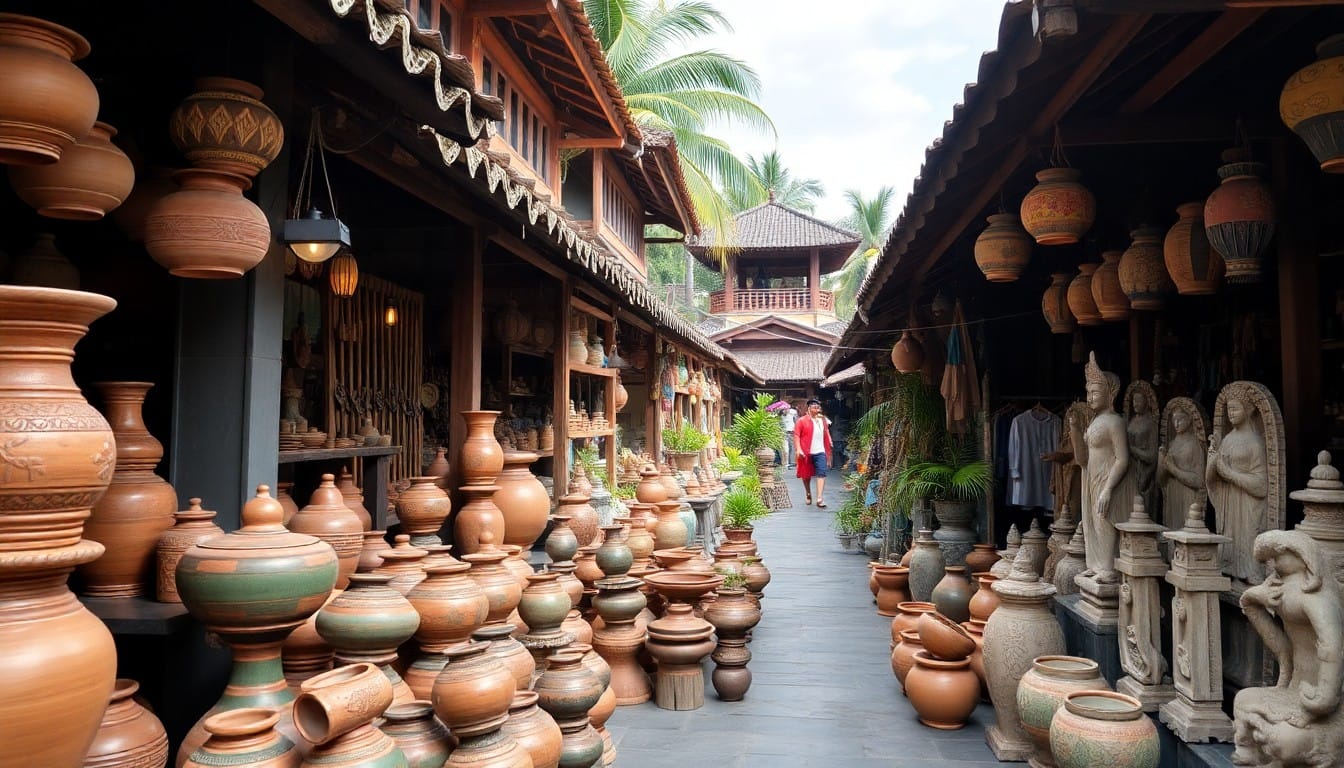
That afternoon, shaken in more ways than one, I walked into Ubud town. I needed to be around people, to convince myself that the ground was solid, that the world hadn't permanently shifted on its axis. The market in Ubud is a labyrinth of stalls selling everything—batik fabrics and carved wooden masks and paintings and jewelry and more incense than any person could burn in a lifetime. I wandered through it in a daze, not really looking for anything, just letting the press of humanity reassure me.
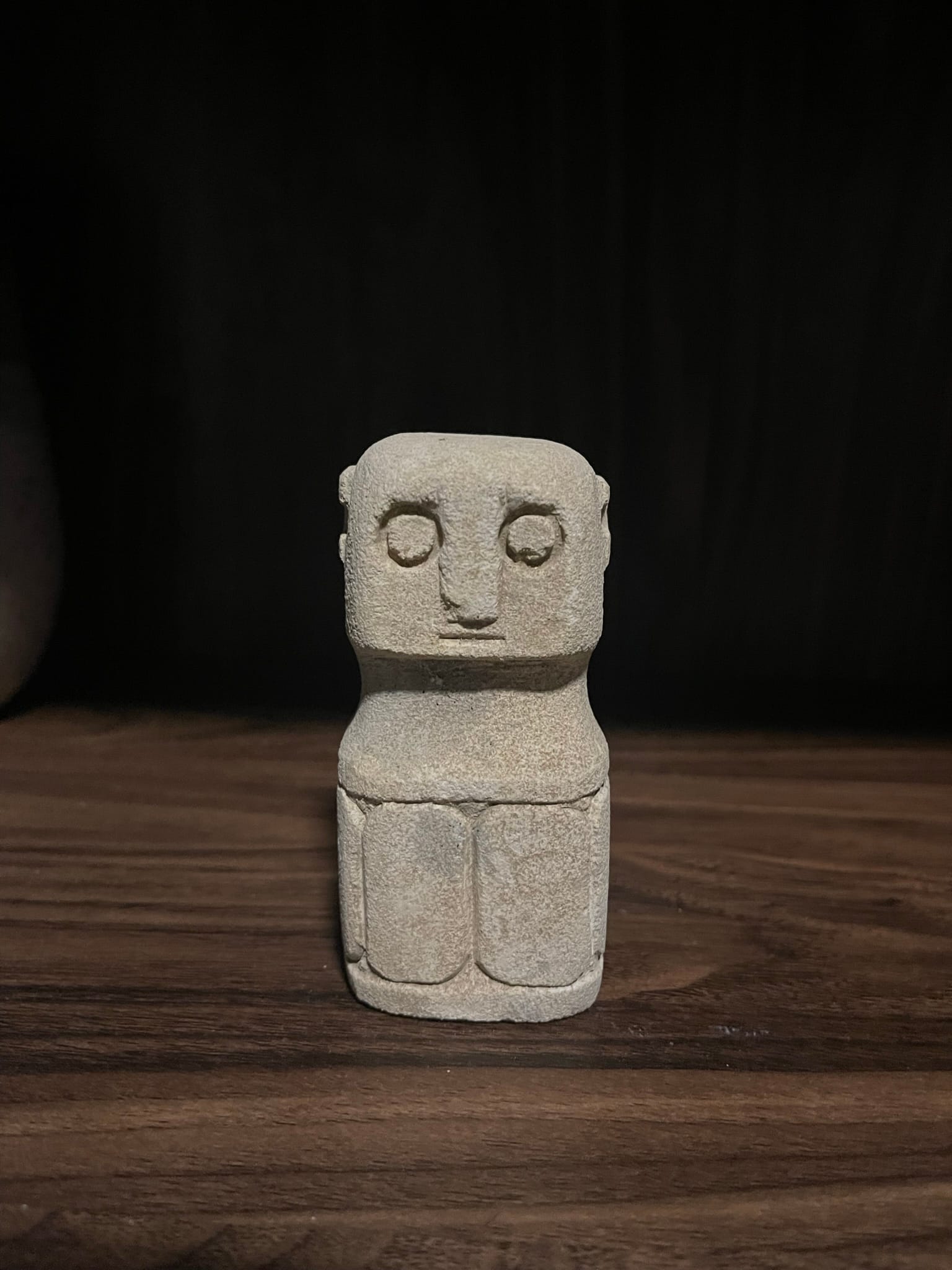
The little guy found me in a stall near the back of the market, a narrow space filled with stone carvings of various sizes. He was maybe four inches tall, a primitive-style figurine carved from gray volcanic stone, with a face that seemed both ancient and amused. The features were simple—deep-set eyes, a broad nose, lips curved in what might have been a smile—but there was something knowing in the expression, something that suggested he'd seen it all before. Earthquakes, tourists, centuries of humans passing through this island thinking they understood something about it.
The figurine has survived every move since that first trip. When I look at it I remember being young and taking risks that seem insane in retrospect.
The woman selling him said he was a guardian figure, the kind placed in homes and temples to ward off evil spirits. She couldn't tell me exactly how old he was—could be decades, could be centuries, these things are hard to date—but she assured me he would protect whatever space he occupied. I wasn't sure I believed in protection from evil spirits, but after feeling the earth move under my feet that morning, I figured I could use all the help I could get.
The rest of that trip blurs together in memory. More temples—the monkey forest with its aggressive macaques stealing sunglasses and water bottles, the sea temple at Tanah Lot perched on a rock outcropping as the waves crashed below, the water palace with its reflecting pools and tropical flowers. More meals of nasi goreng and satay and fresh fruit that tasted like nothing I'd ever had back home. More scooter rides through villages where children waved from doorways and grandmothers sat on porches watching the world go by. More sunsets that turned the sky into gradients of orange and pink and purple that seemed too vivid to be real.
But the earthquake is what I remember most from that trip—the sudden reminder that the ground beneath our feet is never as solid as we think, that the world can shift without warning, that the only constant is change. The Balinese understand this better than most. They live on an island formed by volcanoes, subject to earthquakes and tsunamis and the other forces of nature that most of us have learned to ignore. Their religion acknowledges the chaos, builds rituals around it, finds meaning in the impermanence. Every day they make offerings to the gods and the spirits, acknowledging that human life exists at the mercy of larger forces, that the best we can do is show gratitude and respect and hope that's enough.
The little guy sits on my shelf now, his stone face watching whatever happens in my apartment with that same knowing expression. I'm not sure he's actually protecting me from evil spirits—my life has had its share of difficulties since I brought him home—but maybe that's not the point. Maybe the point is that he reminds me of that day, of the earthquake and the walk through the market and the moment I realized that I'd survived something, small as it was. He reminds me of Bali, of a place where the sacred is everyday, where the earth moves and life continues, where a month total across two trips still wasn't enough time to understand anything but enough time to fall in love. That's what I carry with me—not understanding, but love. And sometimes that's enough.