


Table of Contents
We went to Mexico City for my birthday—me, Peter, and Dave, who'd been living there for a year and promised us things we couldn't get anywhere else. Everything I thought I knew about Mexican food turned out to be wrong.
I went for a long weekend that turned into a week, the original plan expanded as I kept finding reasons to stay. The first reason was the food—not just tacos, though the tacos were transcendent, but the whole ecosystem of Mexican cuisine that the city houses. Street vendors serving tacos al pastor from vertical spits, the meat sliced directly onto corn tortillas, a piece of pineapple balanced on top. Upscale restaurants reinventing traditional dishes with techniques borrowed from Scandinavia and Japan. Markets where women sold mole made from recipes their grandmothers guarded, complex sauces that took days to prepare and tasted like nothing you could find elsewhere.
The second reason was the neighborhoods. Mexico City is really a collection of villages that have grown together, each colonia with its own character and rhythm. Roma Norte with its tree-lined streets and cafes and bookshops, the preferred haunt of young creatives and expats. Coyoacán where Frida Kahlo lived, cobblestoned and quieter, the blue house where she was born now a museum crowded with devotees. Condesa with its Art Deco buildings and circular parks, restaurants spilling onto sidewalks, the sense of a permanent party just getting started. I walked for hours through each neighborhood, getting lost on purpose, letting the city reveal itself at its own pace.
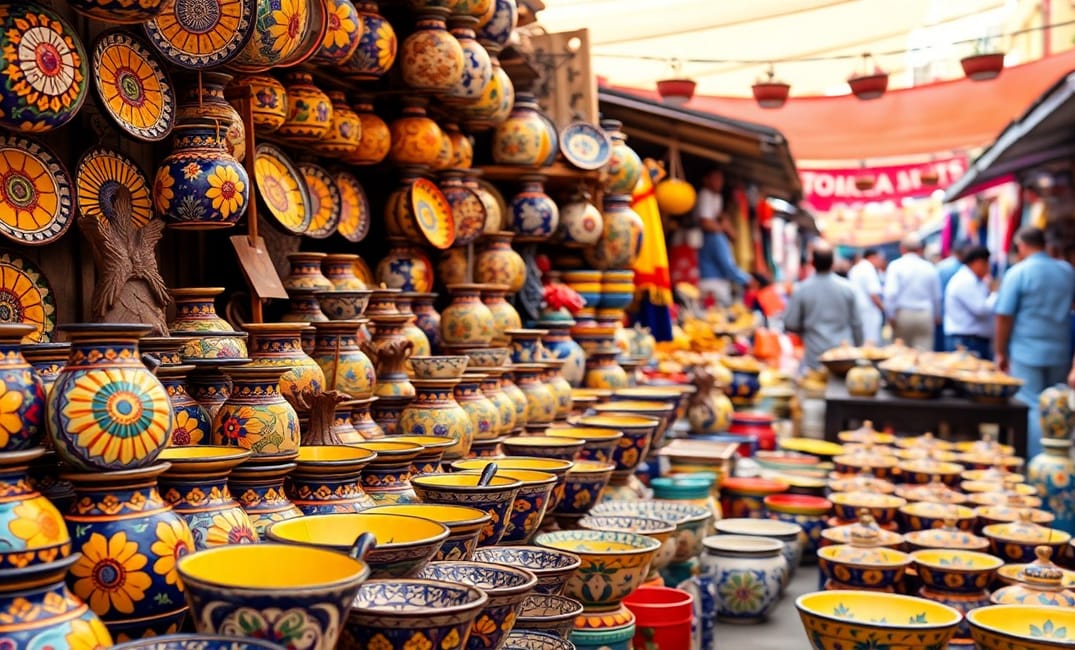
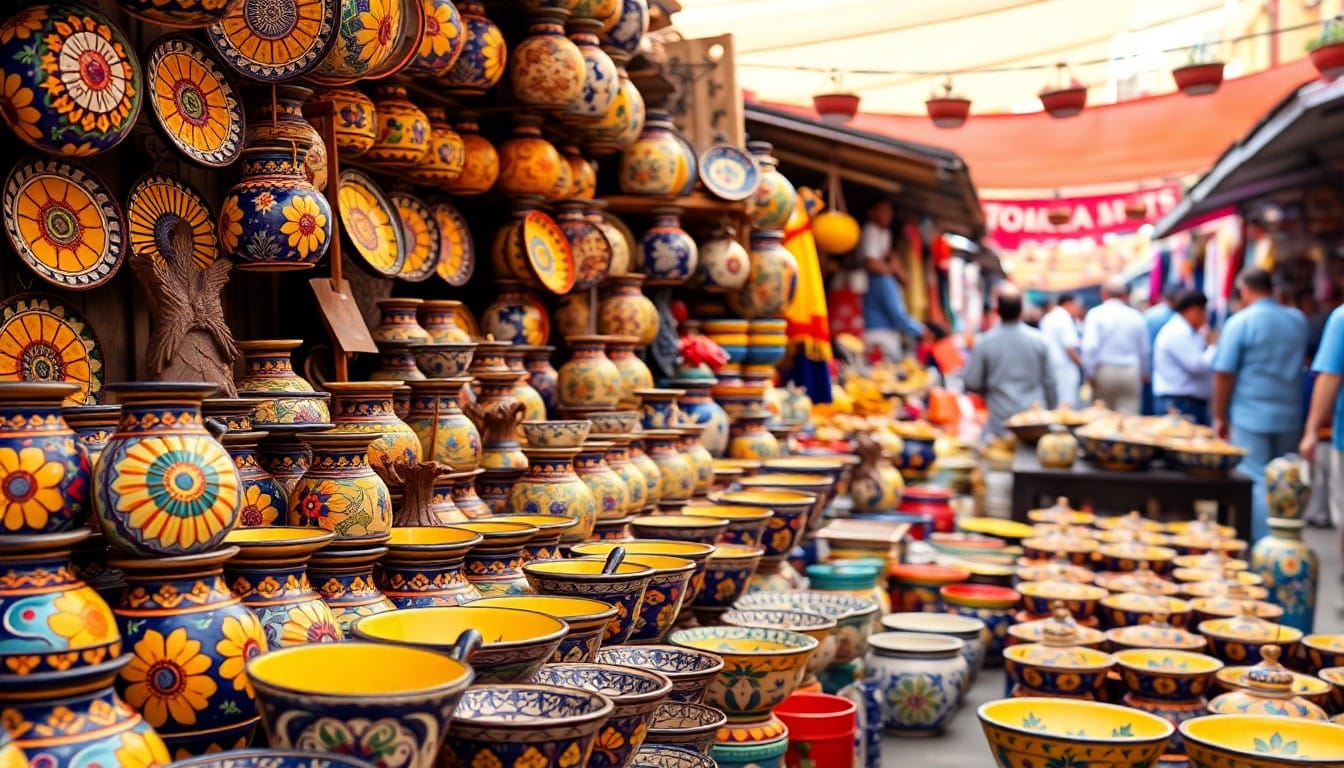
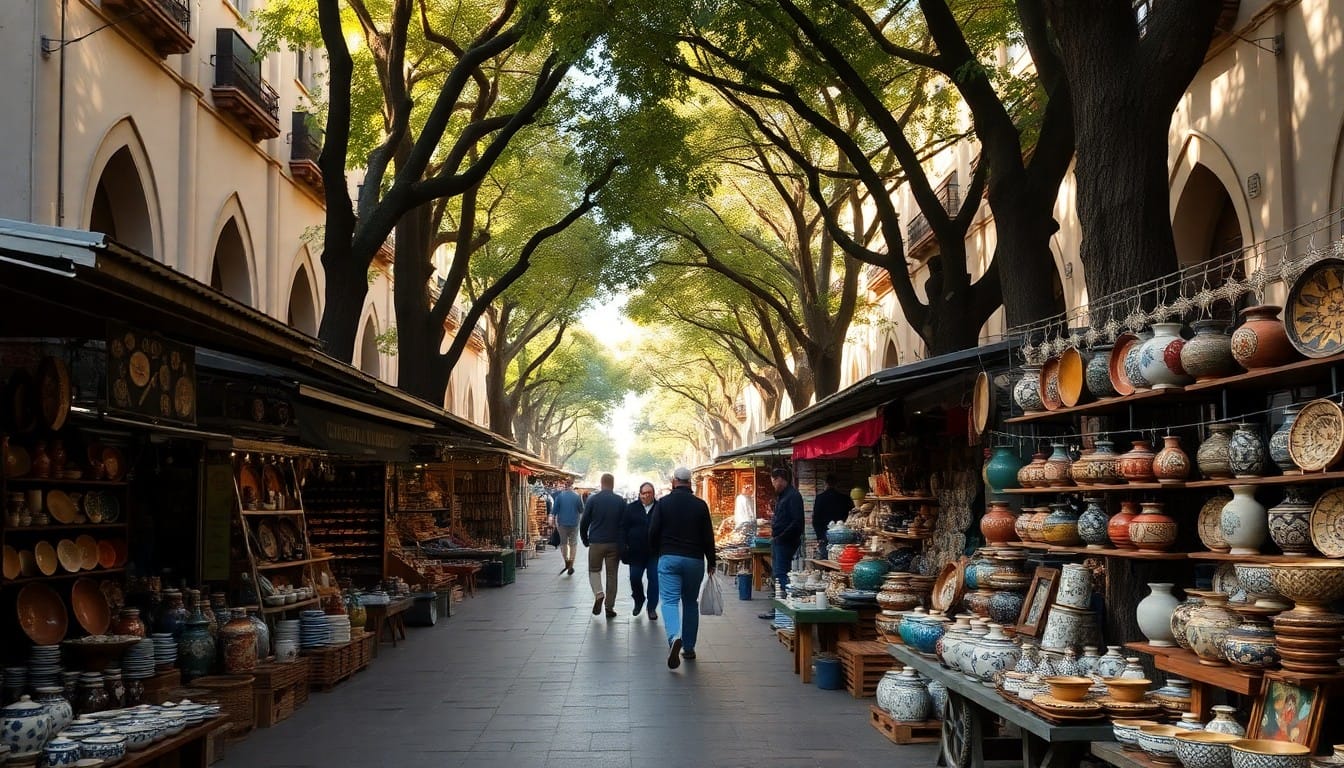
The pottery found me in a market in San Angel, a neighborhood I hadn't planned to visit until someone at my hostel mentioned the Saturday bazaar. It was one of those sprawling outdoor markets where artisans from across the country come to sell, the quality ranging from tourist trinkets to genuine art. I walked through it slowly, pausing at stalls that caught my eye, trying not to think about how I'd fit anything I bought into my already overstuffed backpack.

Mexican folk art is overwhelming in its variety and vibrancy. The Oaxacan alebrijes, fantastical creatures carved from wood and painted in psychedelic colors. The Talavera pottery of Puebla, tin-glazed and painted in patterns that trace back to Spanish colonial times. The black clay pottery of Oaxaca, shaped without a wheel and polished to a metallic sheen. The tree of life sculptures covered in Biblical scenes and tiny figures. Each region has its traditions, its techniques, its aesthetic vocabulary, and in a market like San Angel you can find representatives from all of them.
There are so many trees in Mexico City. That surprised me more than almost anything. I'd expected sprawl and concrete. What I found was green everywhere.
The pieces I bought were traditional Mexican folk art pottery in vibrant colors—I remember being drawn to them precisely because they were so different from the muted tones I'd collected elsewhere. Bright reds and yellows and blues, painted with the kind of confident brushwork that comes from generations of practice. The designs were elaborate: flowers and birds and geometric patterns layered over each other in a visual density that would overwhelm in another context but somehow worked here. They were meant to be celebratory, joyful, an expression of a culture that finds beauty in abundance rather than restraint.
The woman selling them was from Michoacán, a state famous for its lacquerware and painted ceramics. She'd been coming to the San Angel market for twenty years, she told me, setting up her stall before dawn every Saturday, selling until the afternoon crowds thinned. Her grandmother had started the tradition; her mother had continued it; she was carrying it forward to her own daughters, who were somewhere in the crowd that day, probably eating churros instead of helping with sales. The pottery was made in her village by a cooperative of women who shared techniques and resources, each piece marked with a small stamp that identified the individual maker.
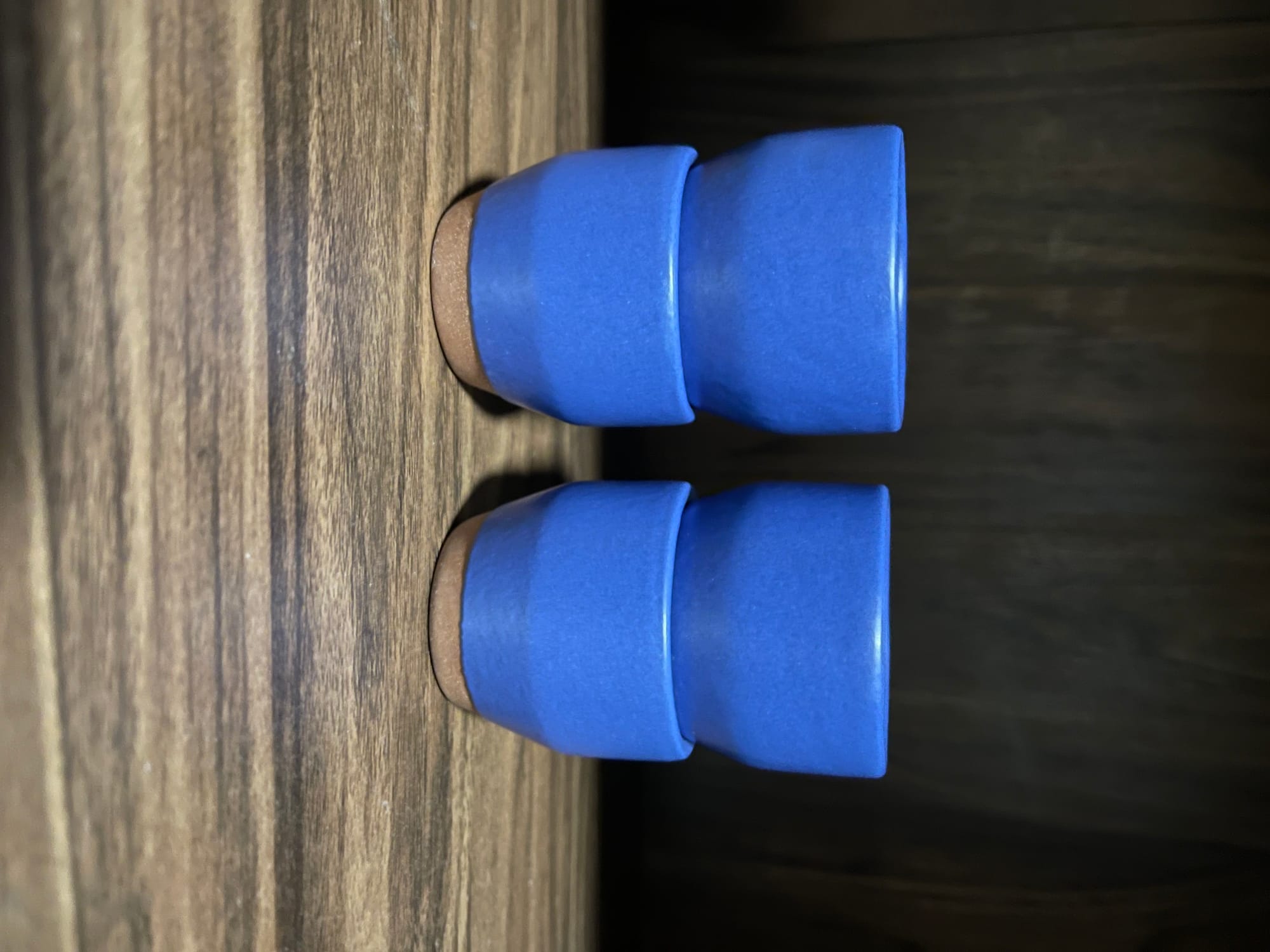
I also found a set of tequila cups—small, cylindrical, the perfect size for a proper shot of mezcal or tequila. They were glazed in blues and greens with traditional patterns circling the rims, practical objects elevated by the care taken in their making. The vendor who sold them, a younger guy with an artist's sensibility, explained that drinking from beautiful vessels was its own form of pleasure, that the Mexicans understood alcohol as a ritual rather than just intoxication. You sipped slowly from cups like these, appreciating the craft of both the drink and the container.
The tree-lined streets of Roma Norte became my home base that week. I'd wake late, walk to one of the dozens of cafes for breakfast—chilaquiles or eggs with beans or fresh fruit with yogurt—and let the day unfold without an agenda. Sometimes I'd end up at a museum—the anthropology museum with its Aztec Sun Stone, the Frida Kahlo house in Coyoacán, a contemporary gallery in a converted industrial space. Sometimes I'd just walk, photographing murals and street scenes, eating street food whenever hunger struck, talking to other travelers in the hostels and bars where backpackers congregated.
The muralism tradition in Mexico City is overwhelming. Diego Rivera and David Alfaro Siqueiros and José Clemente Orozco—the famous three—painted walls across the city with scenes of Mexican history and revolutionary fervor. But the tradition continues today, younger artists covering buildings with works that engage with contemporary politics and culture. Walking through certain neighborhoods is like walking through an outdoor gallery, every surface a potential canvas, the city constantly remaking itself in paint.
The cups came home unused, still wrapped in newspaper. Too nice to risk breaking in some drunken evening that would never live up to Mexico City anyway.
Mexico City changed something in me, or maybe just revealed something that was already there. I'd been traveling for months by then, collecting experiences and objects as I went, and the city felt like a culmination—the most alive place, the most complex culture, the art that asked the most of its viewers. The pottery I brought home isn't subtle; it demands attention, insists on joy, refuses the quiet restraint of Scandinavian design or the muted elegance of Mediterranean ceramics. It's loud in the best way, a celebration of life's vividness, a reminder that beauty doesn't have to whisper.
The tequila cups get used when friends visit, passed around with good mezcal and stories about where they came from. The folk art pieces sit on my shelf, their colors bright against the neutral walls, a visual jolt that makes me smile every time I notice them. They're out of place in my apartment in the same way Mexico City felt out of place in my life—unexpectedly perfect, a disruption I didn't know I needed. I'll go back someday. The city is inexhaustible; one week barely scratched the surface. There's more pottery to find, more tacos to eat, more streets to wander, more murals to photograph. The place waits for me, twenty-one million strong, still working against all odds, still proving that chaos can be creative.
The mornings in Roma Norte became a ritual. I'd find a cafe with outdoor seating, order coffee and something sweet, and watch the neighborhood wake up. Elderly men walked small dogs. Young professionals hurried to the metro. Shopkeepers swept sidewalks and arranged displays. The energy built gradually, from the quiet of dawn to the full-throttle chaos of midday. Mexico City doesn't ease into its days; it explodes into them.
I took a day trip to Teotihuacán, the ancient city of pyramids outside the capital. Climbing the Pyramid of the Sun—the third-largest pyramid in the world—I looked out over the Avenue of the Dead and tried to imagine the city as it once was: two hundred thousand people living in this planned urban center, long before the Aztecs arrived, long before the Spanish conquest. The civilization that built it didn't leave records; we don't even know what they called themselves. But they left these monuments, these masses of stone that have endured for millennia, that still inspire awe in everyone who climbs them.